Lisbon is easier to enjoy when you work with its hills rather than repeatedly climbing across them. Baixa provides a useful lower-level anchor, Alfama and the castle area rise to the east, and Chiado leads towards other central neighbourhoods on the western side. Belém is a separate riverside outing, not a stop to add casually between two old-town reservations.
Allow three full days for a first visit that combines central streets, viewpoints and the western riverfront. Four gives room for a slower pace or a day trip, while two calls for choosing fewer districts. The city rewards pauses: a café, a ferry-side outlook or an ordinary square can contribute as much as another admission.
Understand the central districts
Baixa and the river
Baixa’s grid makes a practical starting point for orientation. Walk towards Praça do Comércio and the Tagus, then look back at how the streets connect with the higher areas on either side. This is one of the easier parts of a first outing when you want a sense of the city before choosing a climb.
The main streets can be busy, but side routes and smaller squares offer opportunities to stop. You do not need to complete a full shopping circuit or queue for every celebrated lift to appreciate the setting. Use the lower area as a connector between visits rather than an obligation to keep moving.
Alfama and the eastern hills
Alfama’s lanes, stairways and changing views create a very different experience from Baixa. Choose a route with a clear endpoint, such as a viewpoint or a meal, and allow the walk to unfold between those anchors.
The district remains residential. Keep doorways clear, lower voices on narrow lanes and avoid treating private stairs or washing-filled passages as unrestricted photographic scenery. A picturesque neighbourhood is also somewhere people need to get home and sleep.
Gradients matter with luggage, a buggy or limited walking stamina. A short distance can involve steps or a steep return, so check the actual route before booking accommodation or a restaurant above the lower streets.
Chiado, Bairro Alto and Príncipe Real
Chiado makes a useful link between the lower centre and the western hills, with cafés, shops and cultural interests that can support a substantial local outing. It suits an afternoon when you want variety without moving far between each stop.
Bairro Alto has a different evening identity. Its activity can be appealing for a night out but disruptive if your bedroom faces a busy street. Visit because you want the evening setting rather than assuming every central hillside area is equally suitable for an early night.
Príncipe Real offers another focus for shops, meals and time around its garden and surrounding streets. It is not a substitute label for Chiado, and its higher location changes everyday journeys. Consider the whole return route rather than only a map’s centrality.
Our Lisbon accommodation comparison explains how those distinctions affect a stay. The right area is the one that fits your ordinary evenings as well as the sightseeing photograph you most want.
Choose viewpoints rather than collecting them
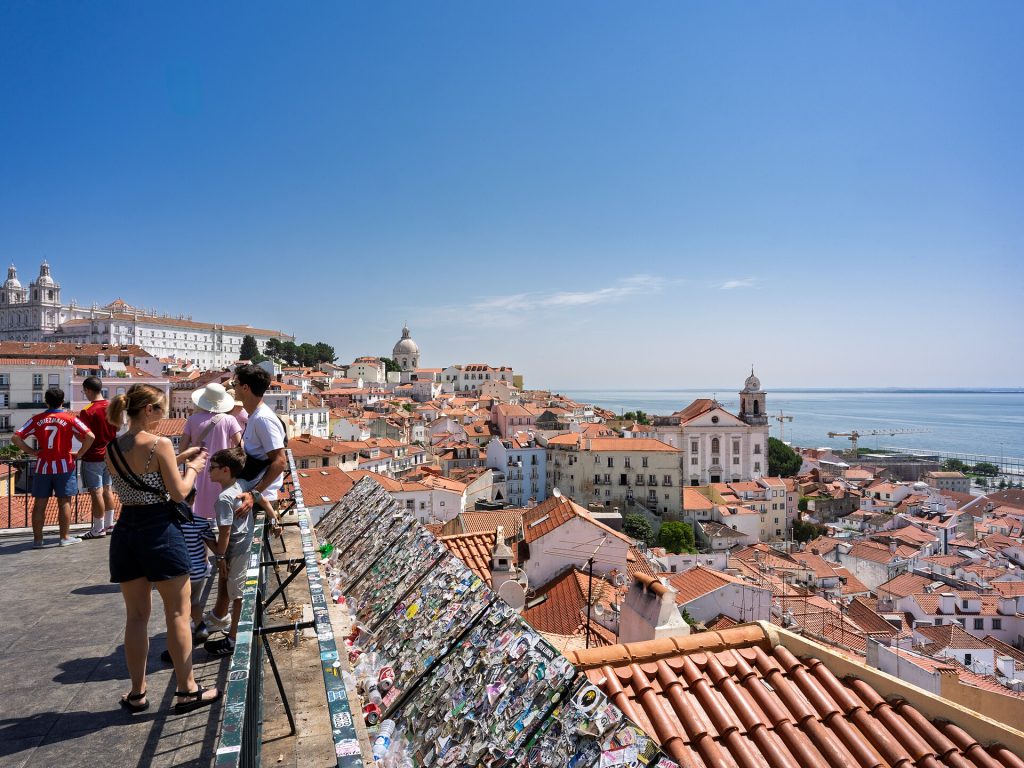
Lisbon’s outlooks help explain its geography, but visiting every popular miradouro can turn a day into repeated uphill travel. Choose one or two with different perspectives and allow time to enjoy them.
The eastern viewpoints around the Alfama side complement a neighbourhood walk, while a western outlook can fit a Chiado or Príncipe Real outing. Conditions and crowds affect the experience, so a view that is famous for sunset may be more enjoyable earlier when it fits your route.
A tram or bus can help with some climbs, but the final approach still deserves checking. Our viewpoint and historic-tram guide distinguishes the experience of riding a traditional route from simply finding the easiest way up a hill.
The castle area: a deliberate uphill visit
The São Jorge Castle area provides another way to understand the city’s relationship with the river and surrounding hills. Choose the visit for its setting and historical interest rather than treating it solely as a viewpoint reached after a long walk.
Check the current visitor arrangements if you want to enter, and leave time for the approach and uneven surfaces. A ticketed hilltop attraction is not automatically the easiest option for every group, especially in warm weather.
Afterwards, continue through a limited part of the eastern neighbourhoods or return for a meal. Avoid attaching a second distant hill climb simply because you feel you should use every hour of the afternoon. Lisbon becomes tiring fastest when the terrain disappears from the plan.
Belém: give the western riverfront a proper block
Belém combines major monuments, cultural venues and a different riverside setting from the old centre. It deserves a morning or afternoon of its own, with transport planned both ways.
The Jerónimos Monastery is a natural architectural interest, while other monuments and museums offer different reasons to come. Choose one substantial interior according to your interests and current access, then leave time for the spaces around it.
The riverfront walk and a pastry stop can complete the outing without requiring another queue at every building. Be careful with crossings and do not assume the shore-facing side of an attraction is the same as its visitor entrance.
If you have only two days, decide whether Belém matters more than a longer central-neighbourhood day. Both can fit in a selective visit, but neither should be reduced to a transport dash merely to claim that it was included.
Choose a museum that matches your interests
Lisbon’s cultural choices extend beyond the most photographed monuments. Art, tile traditions, design and maritime history can each provide a different indoor focus, depending on what you want from the trip.
Choose the collection first and check its location and current programme before fitting it into the route. A museum across town is not a convenient rainy-day stop simply because it appears in the same guide as the district you are already visiting.
For a short stay, one strong museum visit can be enough. If culture is the main purpose, give it another day rather than squeezing several collections between long hill walks. Attention is a finite resource even when admission tickets remain available.
Trams and public transport without making them a mission
A historic tram ride can be enjoyable when you want the route itself. It is less useful when a long queue consumes the time you needed for the neighbourhood you hoped to explore afterwards.
Compare alternatives rather than treating one famous line as compulsory. Modern public transport, walking a smaller section or using a different connection may solve the journey more comfortably. Keep bags secure in crowded vehicles and boarding areas.
Before choosing a pass, estimate the trips you expect to make and check which services are covered. Visitor products, ordinary tickets and airport journeys can have different conditions. A product is useful when it matches your actual travel rather than simply offering a long list of included possibilities.
Food, cafés and a comfortable day
Portuguese cooking offers plenty beyond a pastry checklist. Fish dishes, bacalhau preparations, soups and regional specials create different kinds of meals; ask what a particular kitchen does rather than expecting a single national menu everywhere.
Read prices and clarify any items brought to the table that you did not order. Bread, olives or other starters can be charged separately, so it is better to understand the arrangement before eating than debate it afterwards.
Plan a meal that matters, but let other stops fit the day’s geography. Crossing several hills for an ordinary lunch can use time and energy better spent exploring where you already are. A seated break is especially valuable after an uphill morning.
For fado, compare the venue’s format, booking conditions and whether a meal is part of the evening. Choose it because you want to listen attentively, and follow the setting’s expectations about conversation and filming.
Where to stay and how long to allow
Baixa is a practical first shortlist for lower-level orientation and central journeys. Alfama appeals if its historic hillside setting is part of the reason for coming. Chiado offers another balance of cultural interests and dining, while Príncipe Real suits those who value its local setting enough to accept the gradients.
Check the room’s actual entrance, lift and orientation. A central listing can still involve carrying luggage up stairs, and a quiet-looking lane can have late activity. Comfort should be judged at the property level rather than assumed from a district name.
Our three-day Lisbon itinerary groups the main areas. Add a fourth day if you want a separate excursion without reducing the city to its most obvious landmarks.
Day trips and arrival planning
Sintra and Cascais provide different escapes from the city: one is associated with hilltop palaces and wooded slopes, the other with a coastal town and seafront. Choose according to your interests and the conditions rather than trying to combine both into a hurried day.
If you choose Sintra, secure the relevant palace visit and understand local access before arranging the rest. Our Sintra-versus-Cascais comparison explains the trade-offs.
On arrival, Lisbon Airport’s transport connection needs to be matched to your address and final hillside approach. Our airport-to-hotel guide helps you avoid confusing a central stop with reaching the room itself. Keep the first day modest, then build a rhythm that lets the hills, streets and river complement one another.
A different riverside afternoon
The Tagus can also shape a slower day without another major monument. Choose a public riverside section that fits your base and enjoy the open setting, keeping the route modest rather than assuming the entire waterfront is one continuous easy walk.
If a ferry outing appeals, choose it as a transport experience with a clear destination and return. Check the current service and ticket conditions rather than boarding solely because the opposite bank looks close. The view from the water can provide a different perspective, but it should not become a substitute for understanding where you are going.
This is a useful alternative when a group has had enough hill walking or indoor visits. A meal, a shorter shore walk and an uncomplicated return can be a worthwhile Lisbon afternoon, particularly when it leaves energy for an evening you have deliberately planned.