Barcelona asks you to make a few decisions before you arrive. Book the architecture you most want to enter, choose a base that suits your evenings, and leave enough room for the sea and the streets between attractions. The Sagrada Família, a walk through the old town and an afternoon by the waterfront make a stronger introduction than a succession of expensive admission tickets.
Allow three or four full days for a first visit. That gives you time for Gaudí, the Gothic Quarter, a beach walk and a different neighbourhood without crossing the city repeatedly. Barcelona rewards a plan with a little breathing space, especially when heat, queues or a long lunch slow the day down.
Understand the city’s layout
The old town, Ciutat Vella, sits close to the waterfront. Its best-known areas include the Gothic Quarter, El Born and El Raval, with La Rambla running towards the old port. Above it spreads Eixample, the broad grid associated with Modernista architecture and Passeig de Gràcia. Gràcia lies further inland, while Montjuïc rises southwest of the central waterfront.
These are useful clusters, not places to cover in one continuous walk. Pair the Gothic Quarter with El Born, Passeig de Gràcia with nearby Eixample streets, and Park Güell with Gràcia. Use public transport when moving between clusters, particularly before a timed booking.
The sea is an easy landmark, but being near it does not mean being near every attraction. Likewise, a hotel beside the Sagrada Família is convenient for the basilica, rather than automatically central to the whole visit.
Choose your Gaudí visits
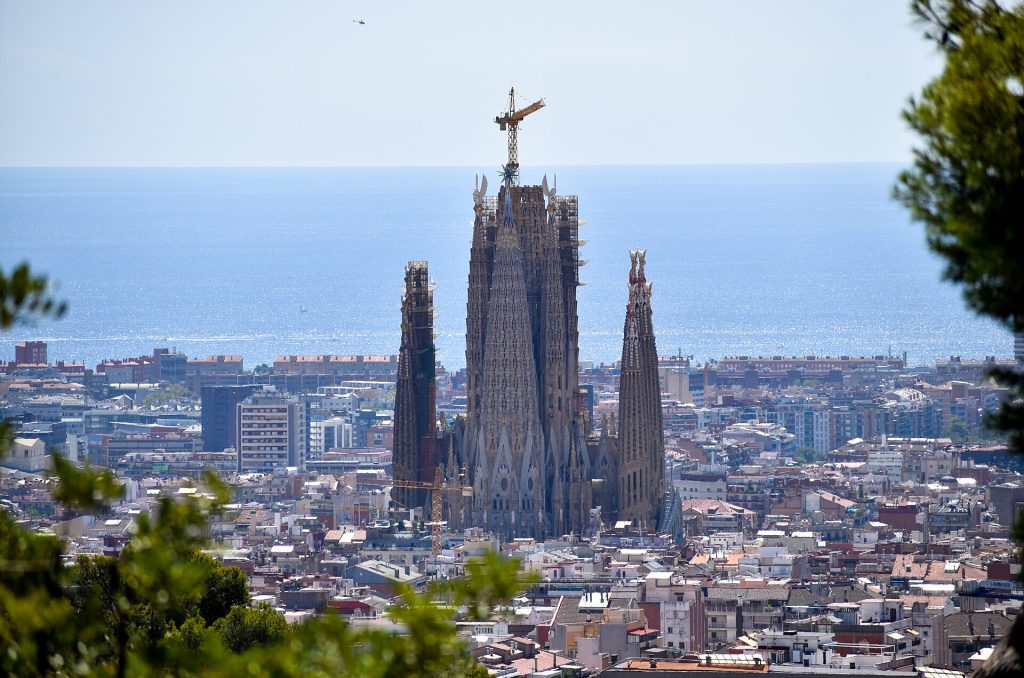
Sagrada Família: prioritise the interior
The basilica’s exterior rewards a slow look, but the interior explains why it deserves more than a pavement stop. Branching columns and coloured light give it a very different character from the sculptural façades outside. If you can afford only one major architectural admission, this is a sensible first choice.
Book through the official Sagrada Família website and check what your ticket includes. Tower access is a separate decision: it involves a lift up and a stair descent, with age and accessibility restrictions. You do not need to add it to appreciate the main church. Bring headphones if using the app-based audioguide, dress appropriately for a religious building and leave a buffer before your next reservation.
Park Güell: architecture on a hillside
Park Güell combines planted slopes, winding paths and Gaudí’s architectural interventions, including its mosaic details and distinctive terrace. It works well as a substantial outdoor visit, rather than a quick photograph on the way to something else.
Reserve through the official park website and choose your approach before setting out. The final climb matters more than the distance a map suggests. Wear shoes suitable for slopes and uneven surfaces, carry water and check accessible routes if needed. For the return, continue towards Gràcia for lunch instead of immediately crossing town.
Passeig de Gràcia: choose one house
Casa Batlló and Casa Milà, also known as La Pedrera, give Passeig de Gràcia two major Gaudí landmarks. You can enjoy their façades during an architectural walk even without paying to enter both.
If you want an interior visit, compare the actual experience, access arrangements and ticket conditions before choosing. Resist buying every optional evening or combined package simply because it appears in the checkout. One considered house visit, with time to look at the wider streetscape, is enough for many first trips.
Explore beyond the ticketed landmarks
Gothic Quarter and El Born
Start around the cathedral, then connect Plaça del Rei and Plaça de Sant Jaume through the smaller streets. The pleasure is partly in the changes of scale: enclosed lanes suddenly opening into squares. The district contains layers of Roman, medieval and later Barcelona, so avoid treating every picturesque detail as a surviving medieval original.
Continue into El Born for the area around Santa Maria del Mar and its surrounding streets. Choose a museum if its collection interests you, but leave time for shops, cafés and a meal. La Rambla is useful to see and to cross; it does not need to be the centre of your entire stay.
Gràcia
Gràcia’s squares make a good counterpoint to the broad avenues below. Plaça de la Virreina and Plaça del Sol provide starting points for a wandering afternoon, with small shops and places to eat along the way. The area was once a separate town, and its compact street pattern still feels distinct from Eixample.
Come to spend time, not to collect another checklist. Squares that feel relaxed over coffee may be busy well into the evening. If you stay here, choose the street and room orientation as carefully as the neighbourhood.
Montjuïc
Montjuïc offers gardens, museums and views over different sides of Barcelona. Choose a section rather than trying to climb every path and visit every institution. The approach to the Museu Nacional d’Art de Catalunya gives a broad city outlook; higher viewpoints reveal more of the port and coastline.
It is a hill, not a compact attraction complex. Decide which museum or viewpoint matters, identify a practical way up and build a walk around it. Our guide to Barcelona’s viewpoints and scenic walks helps match the outing to your energy and interests.
Make the waterfront part of the trip
Barceloneta is the straightforward starting point for visitors coming from the old town. Walk through the neighbourhood to the seafront, then decide whether you want sand, a seated lunch or simply a stretch along the promenade. For a longer outing, continue towards the Olympic waterfront and the beaches further northeast.
Barcelona’s beaches are urban beaches: convenient and social, with the city close behind them. They suit a break between cultural days better than an expectation of secluded coastline. Summer afternoons can be busy, while cooler months still work well for a seafront walk.
Check beach flags and local conditions before entering the water. Keep valuables with someone in your group rather than leaving them unattended while swimming. If beach time is a priority, protect an afternoon for it; squeezing a swim between two reservations tends to make both less enjoyable.
How long to stay
Two full days calls for a narrow selection: the Sagrada Família, one old-town walk and either another Gaudí site or the waterfront. Three days lets you add Gràcia or Montjuïc. Four gives enough room to combine the main architectural visits with a slower coastal afternoon.
For a ready-made sequence, use our four-day Barcelona itinerary. Keep arrival and departure days outside that calculation unless your flight times genuinely leave usable time. Retrieving luggage, reaching your room and finding lunch can easily absorb the part of a day that looked free on paper.
Eat with the neighbourhood in mind
Catalan cooking offers plenty beyond the familiar tapas checklist. Pa amb tomàquet, bread rubbed with tomato and dressed with olive oil, is a useful accompaniment; escalivada brings roasted vegetables to the table, while crema catalana offers a classic sweet finish. Check individual menus rather than expecting every restaurant to serve the same regional dishes.
At lunch, a menú del dia can simplify both ordering and budgeting, but read what is included. Drinks, bread and supplements vary. Markets can be enjoyable places to browse or eat, though they are working spaces and individual stalls keep their own hours.
Make a booking for a restaurant that matters to you and keep other meals flexible. There is little benefit in travelling back across town for a merely adequate lunch when you are already in an interesting neighbourhood. For dietary requirements, ask about ingredients and preparation directly rather than relying on a short translated description.
Getting in and getting around
At Barcelona-El Prat, your terminal changes the calculation. The airport train serves T2, while Metro Line L9 Sud serves both main terminals but requires a change for many central destinations. Aerobús is useful for central stops, and a taxi can make sense with several people or bulky luggage. Compare the complete journey in our airport transport guide.
Within Barcelona, combine walking with Metro or bus journeys. Hills around Park Güell and the distances on Montjuïc deserve particular attention. A kilometre on a hillside is a different proposition from a kilometre through Eixample.
Before buying a transport pass, estimate the trips you will actually make and check airport coverage. For step-free travel, verify the stations, interchanges and entrances on your planned route. A direct bus or taxi can sometimes save enough effort to make the rest of the day more comfortable.
Where to stay
Central Eixample is a useful first-trip shortlist for transport and access to several parts of the city. The Gothic Quarter suits travellers who want the old town outside their door; Gràcia suits those happy to travel further for central sightseeing in exchange for evenings around its squares.
Consider the waterfront if beach access is a genuine priority, and the Sants area if onward rail connections matter. Compare the room, not just the address: air conditioning, lift access, sound insulation and the bed arrangement can affect your stay more than a small difference in walking distance. Our Barcelona accommodation area comparison explains the main trade-offs.
When to visit and what to book
Spring and autumn generally suit a trip built around walking, though neither guarantees dry weather or empty sights. Summer brings stronger reasons to start outdoor visits early and protect a shaded or indoor break. Winter can work well for architecture and museums, with beach walks replacing long periods on the sand.
Book the attractions you would be disappointed to miss, then leave neighbourhood time flexible. Carry a light rain layer when the forecast calls for it, confirm room cooling for warm-weather trips and keep bags secure in crowded transport and sightseeing areas. A realistic Barcelona plan gives its best buildings your attention and still leaves an evening with nowhere urgent to be.