Lisbon’s viewpoints and historic trams are most useful when they fit the same neighbourhood outing. Choosing an eastern outlook during an Alfama walk or a western one around Chiado avoids turning the day into repeated cross-city climbs.
You do not need to see every famous miradouro or ride one particular tram to appreciate the city. A few well-chosen perspectives usually leave more time for the streets between them.
Eastern views: Alfama and the castle side
The viewpoints around Santa Luzia and Portas do Sol provide familiar perspectives over roofs and towards the Tagus. They work naturally with an eastern-neighbourhood walk, giving you a place to pause rather than another destination requiring a separate journey.
Choose the approach according to the group’s ability. Taking transport uphill and walking a smaller route can be more rewarding than arriving exhausted after a climb followed solely because a map showed a short distance.
The outlooks are popular, so allow others space and keep residential access clear. An attractive lane or staircase nearby is not an invitation to enter private areas in search of a less crowded photograph.
The castle: more than another lookout
If you visit São Jorge Castle, treat the setting and historical interest as part of the experience rather than viewing the admission simply as a charge for a panorama. Check the current product and visitor arrangements before choosing your slot.
Historic surfaces and changes in level can affect the route. Anyone with mobility needs should ask about the specific areas they want instead of relying on a broad statement that the attraction is accessible.
Give the visit time and keep the next activity flexible. The castle and several eastern viewpoints in one day can work, but adding a complete western-hill circuit afterwards may contribute more fatigue than variety.
Western outlooks: fit them to Chiado or Príncipe Real
São Pedro de Alcântara is a useful western-side reference point for looking across the city. It can complement an outing around Chiado, Bairro Alto or the streets towards Príncipe Real without requiring another long transfer.
Choose the time because it suits your route and the conditions, not only because the viewpoint appears on a sunset list. A quieter daytime pause can offer more enjoyment than competing for space at a prescribed hour.
The higher location also changes the return. Check whether your route involves stairs or steep streets, and identify a comfortable alternative if someone in the group has had enough climbing.
Historic trams: experience or transport?
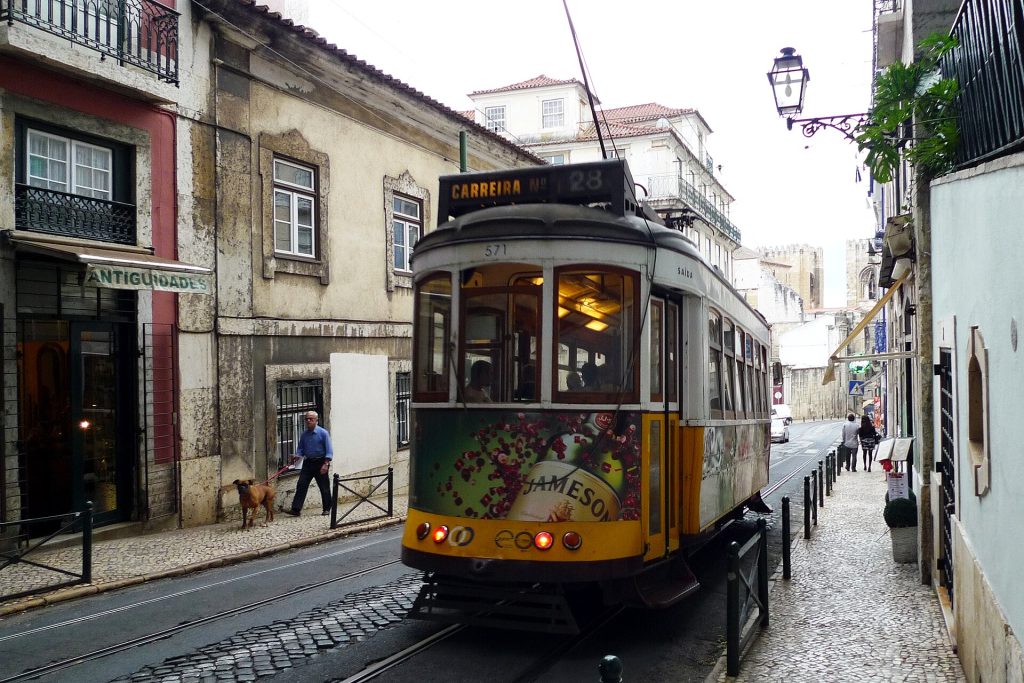
A traditional tram can be an enjoyable way to see parts of Lisbon, but riding a celebrated route and finding the simplest connection are separate goals. Crowding, queues and standing can change the experience substantially.
If the ride itself is important, give it time rather than placing it tightly between two reservations. If you mainly need to reach a district, compare other public transport or a shorter walking approach.
Before boarding
Confirm the current route, direction, payment method and ticket coverage through the Carris website. Works or service changes can affect the pattern you expected, so avoid treating an old route map as a guarantee.
Keep bags secure in crowded boarding areas and vehicles. Large cases and busy historic trams rarely make a comfortable airport-to-hotel plan; use a more suitable connection for that journey.
Avoid making one line compulsory
The famous 28 route is only one possible Lisbon experience. If waiting would absorb the time you wanted for Alfama or another neighbourhood, change the plan rather than continuing from a sense of obligation.
An ordinary transport journey followed by a short local walk may reveal more than a packed ride during which you can see little. Judge the experience you are actually likely to have, not the empty carriage in a promotional image.
Lifts and steep streets need alternatives
Mechanical connections can help with Lisbon’s terrain, but do not make the whole day depend on one facility operating normally. Check current access if a particular lift or route is essential for your group.
The final approach beyond a stop still matters. A station or tram close to the viewpoint on a map can leave stairs or a steep lane before you arrive. Plan the full route when travelling with a buggy, wheelchair or limited stamina.
Our three-day Lisbon itinerary groups the viewpoints with nearby areas. For a comfortable base, compare the central neighbourhoods against both the outward climb and the return, so the city’s topography remains a choice rather than a surprise.
For photography, give yourself a moment without the camera before choosing the frame. Roofs, river and changing light can explain the city better than a tight image of one celebrated landmark. Stay within public areas and avoid standing in a route where other pedestrians or transport users need to pass.