Lisbon Airport has a metro connection, but the best hotel transfer depends on your final address and its hillside approach. A station described as central may still leave stairs or a steep walk with luggage. Compare the complete journey before deciding that public transport or a taxi is automatically easier.
Metro: useful when the onward connection fits
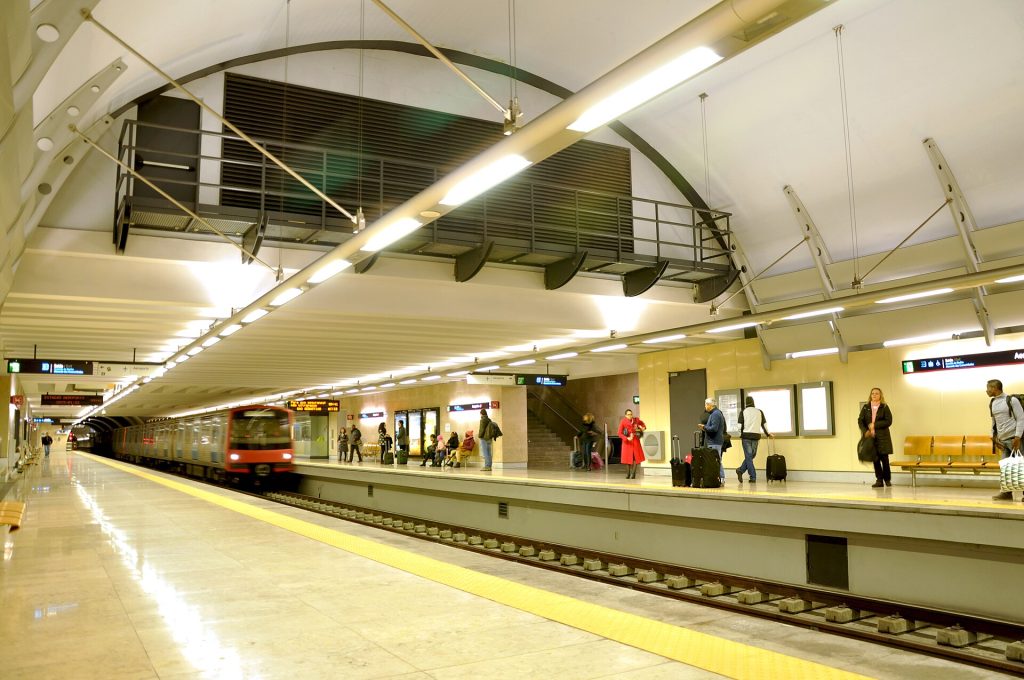
The airport is on the red metro line. For many central districts, you will need to change lines rather than remain on the same train all the way to the neighbourhood you want.
Use the official Lisbon Metro website to check the route, operating hours and current ticket options. Choose a product that covers the journeys you expect, and understand any separate charge for the reusable card.
Count station circulation and the final walk as part of the journey. With a light bag and a convenient address, the connection can be straightforward; with several cases and an upper Alfama entrance, the last section may dominate the decision.
Taxi: choose the actual drop-off
A taxi can simplify arrival for a group, a late flight or bulky luggage. Use the official rank and confirm the address and applicable charging arrangements rather than assuming every central hotel has the same fixed fare.
Ask your accommodation for its recommended vehicle access point. In narrow or restricted streets, the driver may need to stop some distance from the entrance. Knowing that in advance is more useful than discovering it after the cases are unloaded.
If you need particular child restraints, wheelchair access or space for large bags, arrange a suitable vehicle beforehand. A standard taxi is not automatically the right fit for every combination of passengers and equipment.
App-booked and prearranged transfers
For an app-booked ride or private transfer, follow the current airport pickup instructions for that service. The meeting point may differ from the signed taxi rank.
Compare the final price, waiting terms and what happens if the flight is delayed. A transfer solves arrival only when you can identify the driver and meeting location without confusion after landing.
Keep a working contact and the full address available offline if possible. A hotel name alone can be ambiguous, especially when different properties use similar central-location wording.
Match the journey to the neighbourhood
| Staying in | Main issue to check |
|---|---|
| Baixa | Best station exit or vehicle drop-off near the entrance |
| Alfama | Final uphill walk, stairs and vehicle access |
| Chiado | Changes in level between stop and property |
| Príncipe Real | Full route from the connection, including the return gradient |
Our Lisbon accommodation guide explains these differences in more detail. An apparently more expensive transfer can be worthwhile if it removes a difficult final approach, but check that the vehicle can actually reach the point you need.
Return planning
Work backwards from the airline’s recommended airport arrival time, adding walking, waiting and station changes separately. Check early or late services for the exact day rather than assuming the normal daytime pattern applies.
Keep departure day local if your timing is tight. The aim is to enjoy the final morning without making a flight depend on every connection running perfectly.
If your flight uses a different terminal arrangement on departure, verify where your transport drops you and whether another airport transfer is needed. The correct airport is only part of reaching the airline’s check-in or security point. Save that detail alongside the return route rather than leaving it to the last morning.