Athens becomes a better trip when the ancient city and the modern one share the itinerary. The Acropolis deserves your attention, but so do an evening in a neighbourhood square, a market lunch and the streets where people work, eat and meet. Three full days give you time for both, without treating the city as a holding area before an island ferry.
The main historic districts sit close together around the Acropolis. Heat, hills and uneven surfaces make those distances feel longer than a map suggests, so organise the days around one major visit and a nearby neighbourhood rather than a succession of monuments.
Get your bearings around the Acropolis
Plaka lies below the northern and eastern sides of the Acropolis, with narrow streets, small squares and plenty of visitor-oriented restaurants and shops. Monastiraki sits to the northwest, close to ancient sites, the flea-market streets and metro connections. Psyrri extends beyond it, with cafés, workshops, restaurants and a lively evening atmosphere.
South of the Acropolis, Koukaki provides a useful base near the museum and residential dining streets. Syntagma, east of the historic core, connects central shopping, government buildings and public transport. You can walk between many of these areas, but your route may involve hills or busy crossings.
Begin with one simple orientation walk between Syntagma, Plaka and Monastiraki. Save the climb to the monuments for its own visit, particularly if you have just arrived with luggage or during the hottest part of the day.
The Acropolis: plan the visit before the day
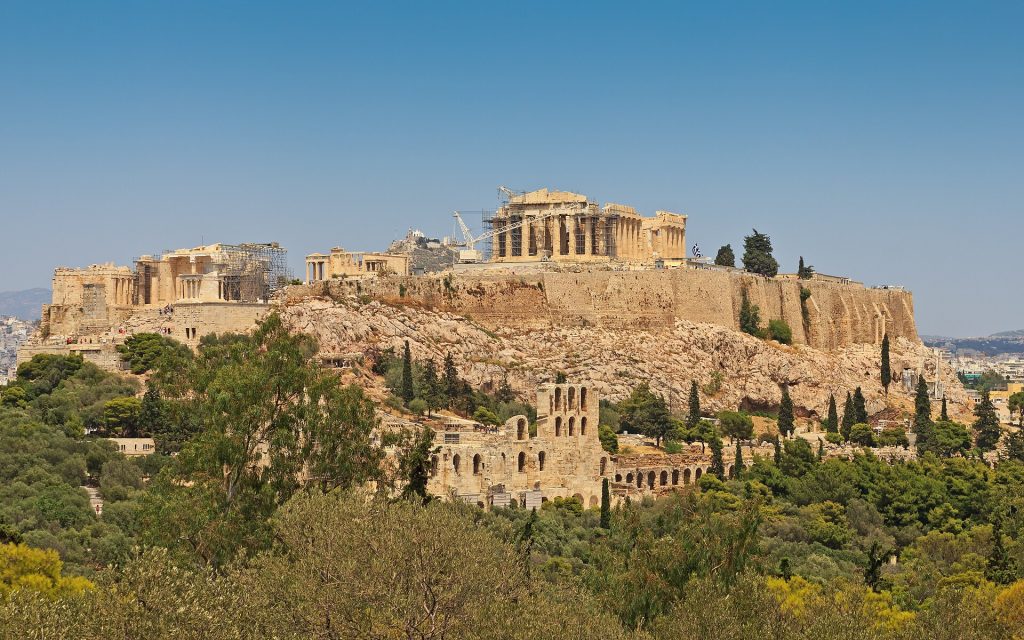
The Parthenon, monumental gateways and other remains on the Acropolis need more than a quick photograph. Read a little background beforehand or choose a guide if you want help distinguishing buildings, historical periods and later changes. Restoration is part of what you will see; do not expect an untouched ancient landscape.
Use the official Hellenic Heritage platform for current admission arrangements and available entry times. Choose a slot that fits the season and your group’s tolerance of heat. Advance booking reduces uncertainty about availability, but does not remove security checks, congestion or the uphill approach.
Wear shoes with grip, carry water and keep the rest of the morning flexible. Polished stone can be slippery, and the exposed plateau offers limited relief from summer sun. Weather or safety restrictions can affect access. Our Acropolis ticket and visiting guide covers the practical decisions in more detail.
The Acropolis Museum: give the sculptures their context
The museum south of the hill complements the archaeological site with architectural fragments, sculptures and explanations of how the buildings were decorated. It is a separate visit with separate ticketing, not simply an indoor extension included in every Acropolis product.
You can visit before or after the hill, depending on your preferred sequence. Beforehand, the collections can make the site easier to understand; afterwards, they help reconnect fragmentary buildings with their detail. Leave a break between the two rather than assuming several hours of uninterrupted standing will suit everyone.
The museum is also a useful anchor for a hot or wet day, though that does not make it a place to rush through until the weather changes. Choose a manageable set of galleries if younger travellers are losing focus.
Ancient sites beyond the hill
The Ancient Agora helps explain the civic and commercial life of ancient Athens. Its open ground and surviving structures provide a different experience from the Acropolis, with the Temple of Hephaestus among the prominent sights. Give the area a proper visit, ideally in a comfortable part of the day.
The Roman Agora and Hadrian’s Library sit within the broader historic centre but belong to different chapters of the city’s history. Pick the places that interest you rather than assuming every enclosure is essential. Ticket combinations and eligibility rules change, so check current products instead of relying on an old multi-site pass recommendation.
For a deeper archaeological visit, consider the National Archaeological Museum. It lies away from the Acropolis cluster and deserves a separate block of time. It is a strong choice for travellers spending a third or fourth day in the city.
Plaka and Anafiotika: wander considerately
Plaka is enjoyable when you leave room for small discoveries: a church, a shaded square or a lane opening towards a view. Its popularity also means that some streets are crowded and meals vary in quality. Read menus and prices before sitting down, especially near major sightseeing routes.
Anafiotika, tucked against the Acropolis slope, has a village-like scale and narrow residential paths. Keep noise down, avoid obstructing doors and do not treat steps outside someone’s home as a private photo studio. The confined lanes can be awkward with a pushchair or mobility aid.
This part of Athens works well early in the day or as an unhurried link between visits. It works less well as another compulsory uphill circuit after a tiring archaeological morning.
Contemporary neighbourhoods and everyday food
Psyrri is useful for a meal, browsing and evening activity, though its atmosphere changes from street to street. Monastiraki provides a busy meeting point, with market lanes and rooftop venues around it. Choose a rooftop for the view if that matters to you, but compare the menu and minimum-spend arrangements before settling in.
Koukaki offers a different rhythm, with bakeries, cafés and places to eat beyond the most heavily visited lanes. Pangrati and the streets around central squares further east can broaden a longer trip. Pick one area to explore in depth instead of travelling between neighbourhood names without stopping long enough to understand them.
For food, combine a sit-down meal with simpler options. Souvlaki, pies and bakery breakfasts can keep the day flexible. A meze-style meal is useful for trying several dishes, but ask about portions and ingredients before ordering a tableful of similar plates. Vegetable dishes may contain cheese, egg or meat stock, so dietary assumptions are worth checking.
Green breaks and city views
The National Garden near Syntagma offers a useful change of pace after busy streets. It can be combined with central sightseeing and a quieter break, especially for families. Check the route and opening arrangements if you plan to use a particular entrance.
For a wider view, the hills around the historic centre offer several possibilities. Philopappos suits a walk near the Acropolis area; Lycabettus makes a more distinct outing. Assess the gradient, footwear and daylight before choosing. Exposed slopes can feel very different at midday in summer from a mild spring evening.
Do not build the whole evening around a crowded viewpoint if what you really want is a relaxed dinner. A lower, easier spot with space to sit can be a better choice for your group.
Where to stay
Plaka suits first-time visitors who want historic surroundings and many sights within walking distance. Check stair access, vehicle drop-off and the noise from restaurant streets. An address at the foot of the Acropolis can still involve an awkward final approach.
Koukaki is useful for museum visits and a more residential meal routine. Look at the exact location: the neighbourhood label can cover addresses with quite different walks to the metro and main sights. Psyrri suits travellers who enjoy lively evenings, provided the room’s sound insulation matches their sleep needs.
Compare these areas in where to stay in Athens. For summer, reliable cooling matters; for an apartment, check check-in arrangements and actual sleeping spaces. A view of the Acropolis is appealing, but it should not outweigh a room you can reach and sleep in comfortably.
Transport and airport connections
The metro is useful for arrivals and longer city journeys, while walking links much of the historic core. Keep belongings secure in crowded trains and around busy interchanges, without letting that practical precaution dominate your visit.
Airport metro services use line 3, but airport journeys require the appropriate fare product and not every train on the line serves the airport. The X95 express bus links the airport with Syntagma and is useful when rail times do not match your flight. Taxis provide a direct alternative, particularly with luggage or an awkward final connection.
Our Athens airport transfer guide compares the options. If connecting to a ferry, plan for the actual port and departure gate; a central Athens hotel and a ferry terminal are different destinations.
When to visit and how long to stay
Budget for a few paid visits rather than expecting to enter every archaeological site. Choose the places that answer different questions: the Acropolis for monumental architecture, the Agora for civic life and a museum for objects and context. This approach also leaves money for a good meal and reduces the fatigue of repeatedly walking through exposed ruins. Travellers with children can let each person choose one object, building or story to investigate instead of asking everyone to absorb a complete historical survey.
For evenings, keep one reservation near your base and one in a neighbourhood you want to explore. That creates variety without making every dinner a transport problem. Check the route home before sitting down, particularly if your room lies on a hill or your group has already walked further than expected.
Spring and autumn generally favour walking, while summer requires an earlier start, shade and realistic breaks. Winter offers a different pace, with shorter daylight and possible rain, but suits a museum-focused city break. Check holiday arrangements for major sites before choosing a tightly scheduled visit.
Two days cover selected highlights. Three allow a better balance of antiquity, food and modern neighbourhoods; use the three-day Athens itinerary as a framework. Add another day if you want substantial museum time or a separate coastal outing.
Is Athens manageable without a car?
Yes. A central stay, metro journeys and walking are enough for most first visits. A car adds parking and traffic complications without improving the main historic sightseeing route.
Should you book every attraction?
Prioritise the Acropolis and any other visit with restricted availability. Leave neighbourhood walks and meals some flexibility. The city becomes more rewarding when your schedule allows you to stay somewhere simply because you are enjoying it.