An Acropolis visit involves three separate decisions: buying the right admission, choosing an entry time and preparing for the climb. Sort those out before arrival and the monuments become easier to appreciate. Advance booking helps with availability, but does not make the site a queue-free or effortless visit.
Buy through the official route
Start with the Hellenic Heritage Acropolis page and follow its ticket link. Check the date, entry time, admission category and what the product includes before paying. Websites with similar attraction names may be independent sellers offering a different package.
Read the current conditions for changes, cancellations and reduced or free admission. If claiming a concession, confirm the evidence required and bring it. Eligibility can depend on more than age alone.
Do not rely on an old recommendation for a multi-site ticket or seasonal discount. Available products and rules can change. Choose admission for the places you actually want to visit rather than assuming a bundle is automatically the best value.
Plan around your entry time
Follow the entry window printed on your booking and leave time for the walk to the gate and any checks. A ticket for a particular time is not permission to arrive anywhere on the hill at that moment.
Early visits can avoid some summer heat, but they are popular. Later visits may suit your itinerary, provided you allow enough time before closing. Check current hours and notices on the official site rather than assuming the longest summer schedule applies all year.
Avoid placing a non-refundable appointment immediately after your visit. Crowd movement, time spent reading and the walk down make an exact finish difficult to promise.
Choose your approach
Approaches from the west and from the southern side create different routes through the site. Decide which entrance suits your accommodation, ticket instructions and onward plans. Acropoli metro station is useful for the museum and southern side; Monastiraki suits a different approach through the historic centre.
Map distance is only part of the effort. Paths include gradients, steps and stone worn smooth by use. Travellers needing step-free arrangements should check the site’s current accessible access information in advance, including availability and any assistance requirements. An ordinary walking route is not an accessible substitute.
Prepare for the exposed plateau
Wear footwear with grip and bring water and sun protection. Shade is limited on the upper site, and stone can be slippery when wet. Keep bags manageable and follow current restrictions on items and behaviour.
During severe weather or extreme heat, access arrangements may change. Check official notices close to the visit and follow staff instructions. A prebooked ticket does not override a safety closure.
Understand what you are looking at
For children, choose a few visible features to discuss rather than requiring them to read every panel. Keep snacks and longer rests for the appropriate areas outside the visit, following site rules. Agree on a meeting point if your group moves at different speeds.
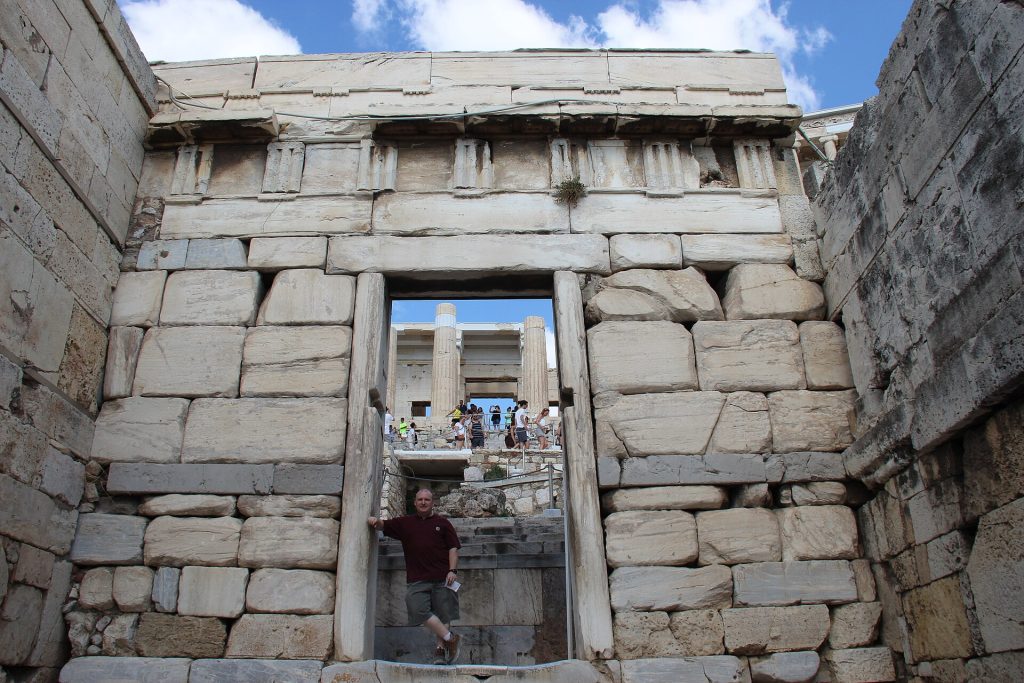
The Parthenon is only part of the site. The entrance buildings, other temples and the relationship between them become more meaningful with a guide, audio material or some background reading. Restoration scaffolding is a normal part of conserving these monuments.
The Acropolis Museum has separate admission. It provides valuable context, but you do not have to visit both places without a break. Pair the hill with a slower meal or neighbourhood walk, as in the three-day Athens itinerary, and give the museum its own time if your schedule allows.