Three days in Athens allow one major historical visit each morning, followed by food, neighbourhood streets and time to recover from walking. This route stays geographically compact and leaves the coast for a longer trip. Book your Acropolis entry first, then move the other days around it if necessary.
Day 1: the Acropolis and the streets below
Morning: give the hill your best energy
Choose an Acropolis entry time that suits the season. In hot weather, an early visit is generally more comfortable than an exposed midday climb, though popular early slots can be busy too. Follow the conditions on your ticket and allow time to reach the correct entrance.
Wear grippy shoes, carry water and keep the next appointment flexible. A guide or a little reading beforehand helps distinguish the monuments rather than reducing the visit to a search for the Parthenon viewpoint. See the Acropolis visiting guide before booking.
Lunch and afternoon: Plaka, with a proper break
Come down into Plaka for lunch, checking menus before choosing a terrace. Keep the afternoon gentle: explore a few lanes, pause in a square and return to your room if the heat calls for it.
Anafiotika can be part of the walk if stairs suit you. Its narrow residential lanes call for quiet and consideration. If your group has had enough climbing, stay on an easier route through lower Plaka instead.
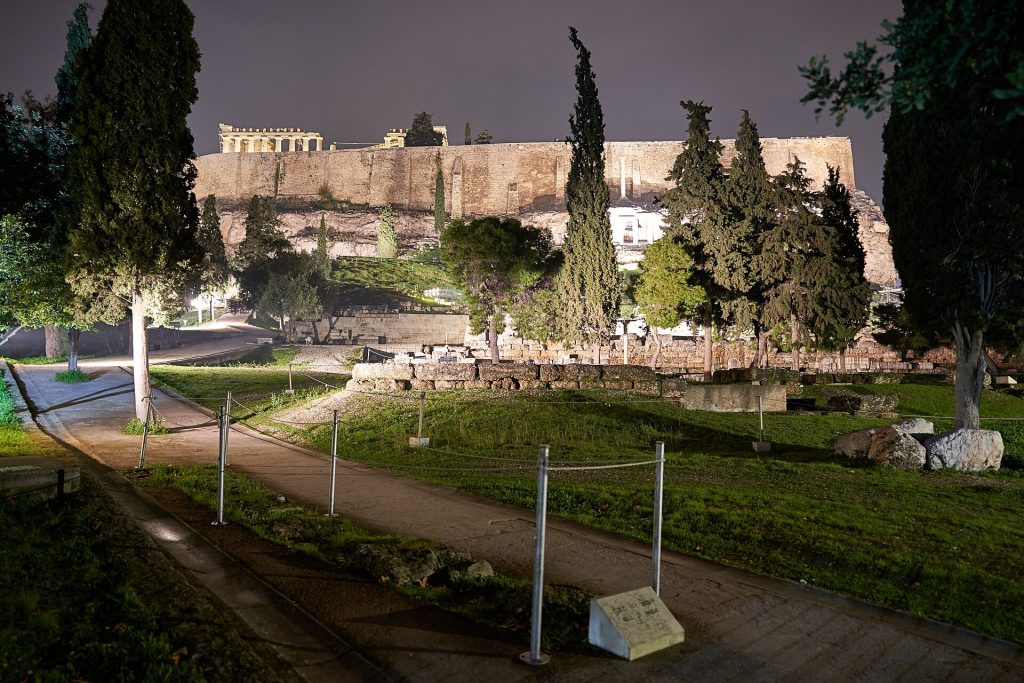
For the evening, choose dinner nearby rather than crossing the city for a second sightseeing circuit. The illuminated Acropolis can be enjoyed from several public viewpoints without making an expensive rooftop meal compulsory.
Day 2: the Ancient Agora, market streets and Psyrri
Morning: understand the everyday ancient city
Visit the Ancient Agora while walking conditions are comfortable. Its civic and commercial role provides a useful contrast to the monuments above. Spend time with the site’s layout and surviving structures rather than immediately adding every other archaeological enclosure nearby.
Continue towards Monastiraki after the visit. The square and surrounding lanes are lively, so allow a slow wander and keep belongings secure in crowded areas. This is a useful day for browsing, but avoid treating all goods sold in market streets as locally made.
Lunch: make food the next activity
Choose a simple grill, meze meal or bakery-led lunch according to your appetite. Ask about portion sizes before ordering several dishes, and check ingredients if you have dietary restrictions. A vegetable name does not guarantee a vegan preparation.
If the central food market interests you, visit during its trading hours and remember that it is a working market, including meat and fish sections. It will not suit every traveller or every child’s interests. A food-focused guided walk is an alternative if you want more explanation.
Afternoon and evening: Psyrri at two speeds
Browse Psyrri’s streets and cafés, then take a break before the evening. This area becomes livelier later, making it a natural place to return for dinner or drinks. Choose an outdoor table for atmosphere or a quieter side street if conversation matters more than activity.
On a hot day, shorten the afternoon walk. You already have a full morning behind you, and the evening will be more enjoyable with some energy left.
Day 3: museum context and a modern Athens afternoon
Morning: the Acropolis Museum
Give the Acropolis Museum a substantial visit rather than a quick stop between departures. Its sculptures and architectural displays help make sense of what you saw on the hill. Museum admission is separate from the archaeological site’s ticket.
Afterwards, eat in Koukaki or nearby streets. The neighbourhood provides a different everyday setting from the busiest Plaka lanes, with options for a relaxed lunch and coffee.
Afternoon: choose green space or another district
For a lighter finish, head towards Syntagma and the National Garden. For more neighbourhood life, choose Pangrati and settle into one area rather than making a list of distant cafés.
If a view matters, consider a late walk on Philopappos Hill, assessing daylight, heat and the route back. Lycabettus is a separate option requiring more travel and climbing; substitute it for the afternoon rather than adding it automatically.
Adjustments for museums, families and departures
Archaeology enthusiasts can replace a neighbourhood afternoon with the National Archaeological Museum, allowing time for the journey. Families can shorten the Agora visit and build in a shaded break. During extreme heat, follow official access notices and use indoor alternatives instead of forcing the original plan.
If leaving for a flight or ferry, keep the final afternoon local and allow a generous transfer margin. For accommodation that supports this route, compare Plaka, Koukaki and Psyrri. Three days work best when your base lets you rest without turning a short pause into another expedition.