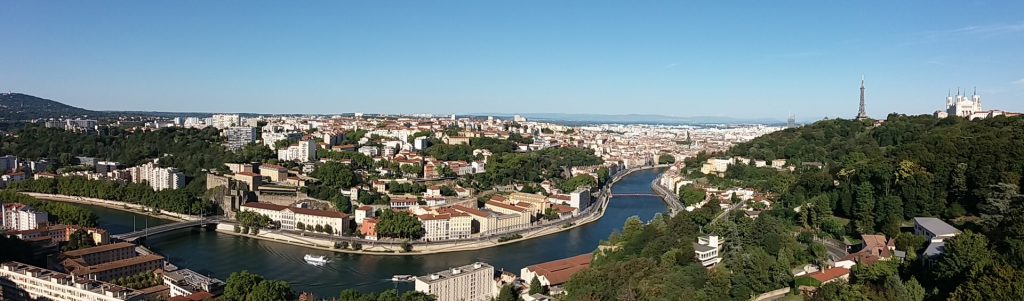
Lyon makes most sense when you follow its rivers. The Saône runs beneath the Renaissance streets of Vieux Lyon; the Rhône borders broad quays and the more spacious eastern city. Between them, the Presqu’île puts squares, shops and restaurants within easy reach. Above everything, Fourvière and Croix-Rousse explain why a short-looking route can involve a substantial climb.
Come for two full days if you want the old town, a hilltop view and a serious introduction to the food. Add a third for museums, neighbourhood wandering and meals that do not have to fit between appointments. Lyon rewards a slower lunch as much as another attraction.
Start with the city’s shape
For a first walk, use Place Bellecour as your reference point. North of it, the Presqu’île leads towards Place des Jacobins, the shopping streets and Place des Terreaux. West across the Saône is Vieux Lyon, with Fourvière rising behind it. Croix-Rousse occupies the northern hill; Part-Dieu, the main rail hub, lies east of the Rhône.
These districts are close enough to combine, but their terrain differs. A riverside stroll and an ascent through the Croix-Rousse slopes are quite different propositions with a pushchair or tired knees. Plan one hill at a time and use public transport for the uphill leg when that suits your group.
Vieux Lyon: Renaissance streets and lived-in passages
Begin around Saint-Jean Cathedral, then explore the streets between Saint-Georges and Saint-Paul. The interest lies in the changing details: courtyard galleries, deep doorways, stone staircases and the relationship between narrow streets and the river. Looking carefully is more rewarding than trying to tick off every passage on a map.
The traboules are passages through buildings and courtyards. Some are accessible to visitors under arrangements with residents, while others remain private or closed. Use the tourist office’s current guidance, enter only where access is clearly permitted and keep voices low. A shut door is not an invitation to test entry codes or follow someone home.
An official guided walk can give architectural details and the history of these passages a clearer thread. Independent travellers can enjoy the district without entering a single courtyard: the public streets, cathedral surroundings and Saône frontage already make a worthwhile half-day.
Fourvière: the view and the Roman city
The basilica of Notre-Dame de Fourvière provides a useful introduction to Lyon’s geography. From the hill, the rivers and the broad eastern districts become easier to place. Inside, elaborate decoration contrasts with the plainer stonework of the Roman remains nearby.
Pair the basilica with the Roman theatres rather than immediately crossing town for another sight. The Lugdunum museum adds context for travellers interested in the Roman settlement, but leave enough time for its collections instead of treating it as a brief shelter from the weather.
The funicular from Vieux Lyon makes the ascent easier. Walking down can be enjoyable, although the paths and stairways are not suitable for every visitor. Choose the return transport independently of how you went up; descending uneven steps may be harder on knees than expected.
The Presqu’île: squares, art and everyday city life
The central peninsula is Lyon’s easiest introduction for visitors who like exploring on foot. Move north from Bellecour through Place des Jacobins, then choose between shopping streets and quieter side streets towards Terreaux. Allow yourself to pause: much of the area’s appeal comes from façades, cafés and the transition between formal squares and small restaurant streets.
The Musée des Beaux-Arts, housed in a former abbey by Place des Terreaux, deserves a proper visit if painting, sculpture or antiquities interest you. Its collections offer a substantial indoor alternative when rain makes hill walks less appealing. Avoid booking it immediately after a large lunch if your attention is likely to wander.
South of Bellecour, Ainay has a calmer feel and is worth considering for a meal or a stay. Further south, Confluence presents another version of the city, with contemporary architecture near the meeting of the rivers. It works best as a deliberate outing, rather than an extra stop squeezed into an old-town afternoon.
Croix-Rousse and the silk-working city
Croix-Rousse brings a different scale: steep approaches, tall former silk workers’ buildings and a plateau with neighbourhood shops and cafés. The district helps explain Lyon beyond its monumental centre. Its silk-working past is visible in architecture designed to accommodate looms and in the routes connecting the slopes.
Take transport uphill, then choose a manageable walk down through the pentes, the hillside streets below the plateau. Do not assume that a line drawn downhill on your map will avoid stairs. Visitors with limited mobility should plan around accessible transport stops and specific destinations rather than trying to follow a conventional walking circuit.
For a first visit, combine Croix-Rousse with the northern Presqu’île. Attempting Fourvière, the old town and this second hill in one rushed morning leaves little room for either neighbourhood.
Food: choose your meals before you choose your timetable
Lyon’s bouchons serve a distinctive, hearty style of cooking. You may encounter quenelles, pâté en croûte, lentils, pork dishes and offal. A traditional menu is rewarding if those flavours appeal, but the reputation of the cuisine is not a reason to order something you actively dislike.
Read the full menu before reserving, particularly if you are vegetarian, avoid pork or have allergies. Sauces, stocks and garnishes can matter as much as the main ingredient. State dietary requirements when booking rather than assuming a restaurant can redesign a fixed menu on arrival.
Les Halles de Lyon Paul Bocuse offers another way into the city’s food culture, with specialist counters and places to eat. It is an indoor food hall rather than a bargain market, and purchases can add up quickly. Choose a focused tasting or lunch instead of arriving determined to sample everything. Our guide to Les Halles and bouchon dining explains how to combine the two.
Balance a substantial restaurant meal with a lighter second meal. Bakeries, cheese shops and riverside picnic opportunities make that easy without reducing the visit to a restaurant checklist.
Rivers, parks and a less scheduled afternoon
For a specialist afternoon, choose cinema history or contemporary architecture rather than another general walking circuit. The Institut Lumière connects Lyon with the early history of film, while the Musée des Confluences gives the southern peninsula a substantial museum anchor. They belong to different parts of the city, so choose one according to your interests and check current exhibitions before travelling. Neither needs to be added to a short first visit simply to make the itinerary look comprehensive. A third day gives you space for a subject you care about and a different perspective on the city.
The Rhône quays provide space for walking and cycling, while the Saône gives you views towards the old town and its hills. Choose the river according to your route rather than crossing repeatedly for the sake of covering both. Keep cycle paths clear when stopping for photographs.
Parc de la Tête d’Or is a useful change of pace for families or anyone spending more than a weekend in the city. It lies away from the densest old-town sightseeing, so build it into an eastern-city day. Bring layers and allow for the walk within the park; arriving at an entrance does not put every garden or lakeside path beside you.
On a hot day, trade an exposed riverside walk at midday for a museum, shaded break or longer lunch. Save the open quays for later, when walking is more comfortable.
Where to stay
The Presqu’île suits a first visit built around sightseeing and meals. You can walk between many central areas, but inspect the exact street: restaurant terraces, deliveries and bars can affect sleep. A courtyard room may be quieter, though natural light can be limited.
Vieux Lyon offers the strongest historic setting, with the trade-offs of cobbles, visitor traffic and older buildings. Ask about lifts, steps before the lift and vehicle access if those details matter. A romantic-looking address is less appealing when reaching the room becomes a daily obstacle.
Part-Dieu is practical for rail arrivals, departures and a more functional hotel base. It is less atmospheric for evening wandering, but good transport links can outweigh that on a short stop. Compare these options in where to stay in Lyon before choosing solely by nightly rate.
Getting around and arriving
Walking works well within individual central districts. The metro, trams, buses and funiculars help connect them and reduce climbing. Use the TCL journey planner for your actual route, including accessibility needs and evening travel. Check what a ticket covers before boarding rather than assuming every rail service belongs to the urban network.
From Lyon Saint-Exupéry Airport, Rhônexpress links the airport with Part-Dieu, with onward urban travel requiring the appropriate separate ticket. Public bus alternatives can suit tighter budgets, but compare the complete journey to your accommodation. Our airport transfer guide covers that decision.
A car is usually more inconvenience than help for a central stay. If Lyon is part of a longer road trip, arrange parking before arrival and explore the centre without driving between sights.
When to go and how to shape your time
Spring and autumn generally suit walking, though rain remains possible. Summer can be hot, especially on exposed slopes and quays. Winter makes museums and food central to the trip; major events can change accommodation demand and the feel of particular streets.
With two days, give the first to Vieux Lyon and Fourvière, and the second to food, the Presqu’île and a selective Croix-Rousse walk. Our two-day food-focused itinerary offers a workable sequence. With three, add a museum and a park or Confluence, leaving space to repeat a neighbourhood at a different time of day.
Is Lyon suitable for a first visit to France?
Yes, particularly if you want a substantial city with strong food traditions and manageable sightseeing clusters. Basic French greetings and a willingness to read menus help, but the main visitor areas are accustomed to international travellers.
Can you enjoy Lyon without booking expensive restaurants?
Absolutely. Reserve one meal that matters to you, then use bakeries, everyday cafés and food shops for the rest. The city’s streets, riverbanks and viewpoints provide much of the visit without requiring a luxury dining budget.