Choose a Lyon base around the evenings you want and the journeys you must make. The Presqu’île is the most straightforward all-round choice, Vieux Lyon brings historic surroundings, and Part-Dieu puts transport first. None is universally cheapest or quietest: the exact building and street matter more than a broad neighbourhood label.
Compare the three main options
| Area | Best suited to | Main advantage | Main compromise |
|---|---|---|---|
| Presqu’île | First visits, restaurants, walking | Central position between the rivers | Noise varies sharply by street |
| Vieux Lyon | Historic atmosphere, short leisure stays | Old-town sights on the doorstep | Cobbles, stairs and limited vehicle access |
| Part-Dieu | Rail travellers, business trips, short stopovers | Convenient mainline connections | Less appealing for scenic evening walks |
Decide whether a central walking base or an uncomplicated arrival will improve your particular trip. For a two-night stay, avoiding an awkward transfer can matter; for four nights, liking the surrounding streets may matter more.
Presqu’île: the strongest first-visit choice
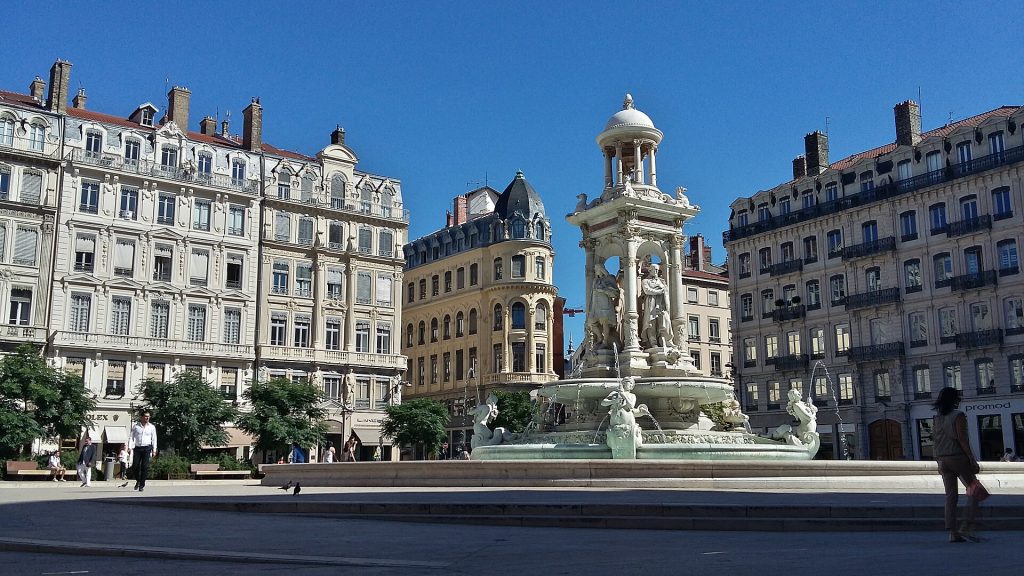
The peninsula between the Rhône and Saône makes sightseeing easy to organise. Staying around Bellecour puts you near river crossings to the old town, while streets towards Cordeliers and Terreaux suit travellers who want restaurants, shops and cultural visits close together.
The main advantage is flexibility. You can return to your room between a museum and dinner without reorganising the day around transport. That is particularly useful with children, during hot weather or when different members of a group want different afternoon plans.
Noise is the main variable. A room above a busy restaurant street may hear terrace conversations and early deliveries; a room near a major square can face traffic. Ask where the actual room faces, rather than relying on a listing that describes the whole property as quiet.
For a calmer central feel, look towards Ainay, south of Bellecour. You may walk further to the northern sights, but residential streets and local shops can make a longer stay more comfortable. Check proximity to a useful station rather than treating the entire southern peninsula as equally convenient.
Vieux Lyon: character with practical trade-offs
Stay here if stepping into Renaissance streets is an important part of your holiday. Saint-Jean offers the busiest visitor setting; neighbouring Saint-Georges and Saint-Paul have their own street-by-street differences. Riverside addresses, interior lanes and hillside approaches should be assessed separately.
Historic buildings can be charming and awkward at the same time. Confirm the floor, lift access and any steps between the entrance and lift. An apartment described as central may still require carrying luggage through a pedestrian street or up a staircase.
This area suits couples and travellers who want old-town restaurants within an easy walk. It is less automatic for wheelchair users, families with bulky pushchairs or anyone relying on a car. Ask a property for a clear arrival description before booking if access could determine whether the stay works.
Do not confuse the old town with the slopes above it. A map pin close to Fourvière may mean a substantial climb on the way home. For sightseeing context, see the Lyon travel guide.
Part-Dieu: choose convenience deliberately
Part-Dieu works especially well when you arrive late by train, leave early or need frequent connections. The airport’s Rhônexpress also terminates here, making it a useful base for a brief visit with luggage.
The surrounding district is more commercial than picturesque. That does not prevent a good stay, but expect to travel to the old town and the most atmospheric riverside streets. Choose a property with a straightforward route to the station entrance you need; the station and neighbouring roads cover a large area.
Hotels here can offer practical room layouts, but modern appearance does not guarantee generous space or quiet. Check family occupancy, luggage storage and the position of the room relative to roads and railway infrastructure. For the airport leg, consult getting from Lyon Airport to the centre.
Compare the final booking, not the headline rate
If you have a car for a wider French itinerary, ask about parking access and charges before arrival. A central property may use a separate public garage, with a luggage drop-off that requires its own directions. Do not assume an advertised parking option means you can drive directly to reception.
A cheaper room across town can lose its advantage once breakfast, local transport and late arrivals are included. Equally, paying for an old-town address brings little benefit if you spend most of the trip elsewhere.
For summer, check whether cooling is available in the room category you are booking. For apartments, confirm check-in arrangements, luggage storage and whether all sleeping spaces have proper windows and privacy. Families should compare actual beds, not just the maximum guest count.
If sleep is your priority, request specific information about glazing, room orientation and nearby nightlife. If mobility is the priority, request the full route from pavement to bedroom. These details will tell you more than a general promise of comfort or a flattering photograph of the lobby.