The French Riviera is easiest to enjoy when you choose one stretch of coast and stop trying to see it all at once. Nice provides the strongest city base, Antibes combines an old town with beaches, and Cannes offers a more resort-oriented stay. Regional trains connect much of the shoreline, while the hilltop villages require more deliberate planning.
For a first trip, allow four or five days and stay in one place. That gives you time for a museum or market, a beach afternoon and a couple of contrasting towns without spending each morning packing. The appeal lies as much in the spaces between sights as in the famous names.
Understand the coastal geography
Nice sits east of Antibes and Cannes. In the other direction are Villefranche-sur-Mer, Èze’s seaside station, Monaco and Menton. This makes east-versus-west planning useful: put nearby destinations together rather than crossing back and forth along the entire coast each day.
The railway generally follows the coast, but a station name can conceal an uphill journey. Èze-sur-Mer is beside the sea, while the medieval village of Èze stands high above it. The same caution applies to accommodation advertised as close to a station: distance on a flat map says little about stairs or steep streets.
Treat the inland villages and mountain routes as separate outings. They can be rewarding, but adding them to an already full coastal day often produces more waiting and driving than sightseeing.
Nice: the most versatile starting point
Nice has enough substance to occupy several days without leaving the city. Begin in the old town, where narrow lanes open towards Cours Saleya and the seafront. Continue to the promenade for a sense of the bay, then climb Castle Hill if the gradient and weather suit you.
The hill offers views over both the old town and port. You do not need to make every visit a circuit of every viewpoint: choose a manageable approach, bring water and allow time to rest. In summer, the middle of the day can be uncomfortable on exposed paths.
The port area and streets around Place Garibaldi offer another useful cluster for meals and wandering. Art enthusiasts can build a day around a museum instead, checking its opening arrangements before travelling across town. Nice’s cultural sights are spread out; a museum day may involve buses or trams rather than one continuous old-town walk.
The beach is largely pebbly, which affects the experience. Water shoes may help, and swimmers should assess conditions rather than treating an urban beach as automatically gentle. If soft sand is central to the holiday, compare other bases before booking.
Antibes: old streets, art and swimming
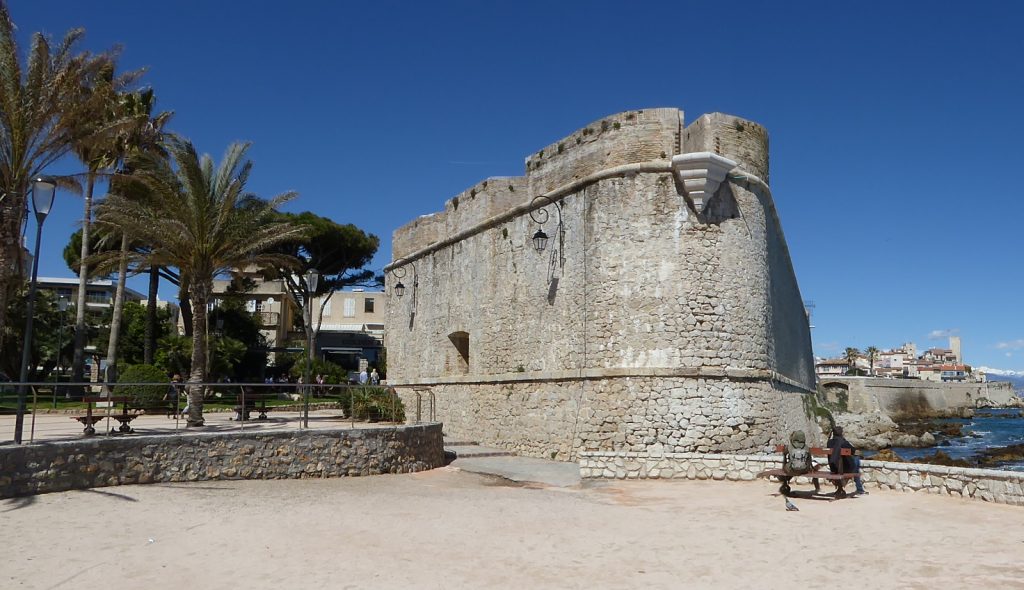
Antibes suits travellers who want a smaller town atmosphere without abandoning useful transport. Its old centre, harbour and ramparts create a compact sightseeing area. Spend time around the market streets, then follow the seafront instead of immediately leaving for another resort.
The Picasso Museum, in the Château Grimaldi, is a natural choice for an art-focused visit. Combine it with the old town rather than planning a fleeting museum stop between several distant attractions. Market trading and museum openings should be checked separately when fixing the day’s order.
For swimming, distinguish the small beach by the old town from the stretches towards Ponteil and Salis, and from Juan-les-Pins on the other side of the peninsula. They do not all share the same setting, exposure or walk from your accommodation. A town-centre address does not automatically mean a sandy beach is immediately outside.
Cap d’Antibes offers coastal scenery, but paths can be rocky and affected by weather, works or access restrictions. Check local notices before setting out and carry footwear suited to uneven ground. A cliffside walk should not be treated as an effortless extension of a swim.
Cannes: look beyond the festival image
Cannes is useful for travellers who want a beach-and-restaurant holiday with rail connections. The Croisette gives the city its familiar grand seafront appearance, while Le Suquet provides older streets and a different perspective above the harbour.
Spend a morning combining the old quarter with the market area, then decide how much of the afternoon belongs to the beach. Public sections and commercially operated beach facilities offer different experiences and costs; check what is included before paying for a lounger or meal package.
Major conferences and festivals can transform room prices and street activity. Check the events calendar before assuming that an ordinary-looking week will be quiet or affordable. Travellers uninterested in those events may prefer to visit Cannes for a day and sleep elsewhere.
Choose a few contrasting day trips
Villefranche-sur-Mer offers a compact harbour setting and a beach close to its coastal railway station, though the town itself includes slopes and steps. It is a useful option when you want a gentler outing than a full day combining multiple places.
Èze is about height, stone lanes and views. Plan the bus connection to the village; the railway reaches the lower coast. The Nietzsche path is a steep walk, not a convenient shortcut for every visitor.
Menton brings pastel façades, a seaside promenade and a stronger sense of the Italian border. Monaco provides a more urban contrast, with tightly packed districts on different levels. Choose between them according to your interests, or give each adequate time rather than assuming both are brief photo stops. See day trips from Nice for the practical distinctions.
How many days do you need?
With three days, choose Nice and one outing. With five, add Antibes and a second eastern destination, leaving a day flexible for weather or a beach. Our five-day train itinerary provides a sequence that avoids moving accommodation every night.
A week lets you spend more time in one town, add Cannes or take an inland excursion. It does not require doubling the number of stops. Train connections make movement possible, but station walks, waits and meals still take real time.
If travelling with young children, use one outing day followed by a local day. The rhythm usually works better than consecutive excursions, especially when summer heat turns a short uphill walk into a substantial undertaking.
What to eat
Nice has a distinct culinary tradition. Socca, a thin chickpea preparation best eaten hot, makes a useful snack. Pan bagnat is a substantial filled bread, while pissaladière combines an onion topping with flavours that commonly include anchovy. Check ingredients if you avoid fish, even when a dish appears vegetable-led.
For a sit-down meal, explore seasonal vegetables, stuffed preparations and local styles of cooking rather than assuming every waterfront menu reflects regional food. A concise menu and clear pricing tell you more than a long list of tourist favourites.
Markets are useful for picnic ingredients, but trading patterns vary by day. Buy food you can keep safely during your outing, carry water and leave no packaging on beaches. A shaded lunch away from the busiest seafront tables can also help control the budget.
Getting around without a car
Regional trains provide the backbone for journeys between the main coastal towns. Check the actual stopping pattern: not every train serves every station. Buy the right ticket for the train category and inspect service notices before an excursion.
Buses help reach hilltop villages and destinations away from the railway. Local urban networks and regional services have different products, so do not assume one ticket covers every journey. For rail planning, use TER’s regional website; our car-free travel guide explains the decisions that matter.
From Nice Airport, tram and regional coach options serve different destinations. If staying west of Nice, compare the airport connection directly to your base rather than travelling into central Nice by default. Airport access to the railway involves reaching Nice Saint-Augustin station, which is separate from the terminal buildings.
Where to stay
Nice works best for a mixed trip with museums, food and eastern day trips. Compare the old town, central streets towards Nice-Ville and the port according to noise and transport needs. A promenade room provides a sea-facing setting but may involve traffic and a longer walk to the railway.
Antibes suits travellers balancing old-town evenings and beach time. Choose between the historic centre and Juan-les-Pins deliberately; they offer different daily routines. Cannes is particularly practical when a sandy beach, shopping and evening dining form the core of the holiday.
Our Riviera accommodation comparison considers these trade-offs. Wherever you book, compare air conditioning, lift access, actual bed arrangements and the route to your most-used station. A lower nightly price can be poor value if every day starts with an inconvenient transfer.
Seasons, sea conditions and realistic expectations
If swimming is the main purpose of the trip, compare beach access before choosing excursions. A compact town beach, a long resort strand and a rocky cove demand different footwear, equipment and supervision. Check flags and local notices on the day, and avoid entering the water merely because other people are swimming. For a beach afternoon after sightseeing, travel with only what you can comfortably carry and keep valuables to a minimum. Returning to your base between the two activities may be worth more than an ambitious plan to carry museum clothes, towels and picnic supplies through several towns.
Summer brings the strongest beach atmosphere alongside heat, crowds and accommodation pressure. Spring and autumn can be more comfortable for walking, but a pleasant day does not guarantee warm water or uninterrupted sunshine. Coastal storms can affect swimming, paths and transport.
Winter suits a city-and-culture trip, with a different rhythm from the high-season beach holiday. Some seasonal businesses reduce operations. Major events can create their own peak periods outside summer, so check the calendar for your chosen town.
Is a car necessary?
For a first visit focused on the main coastal towns, usually not. It becomes more useful for a trip centred on inland villages or remote accommodation, where parking and road conditions need separate consideration.
Can the Riviera be affordable?
Yes, if you keep one base, compare total accommodation costs and mix public beaches with simple meals. The important decision is where to spend: a well-located room may contribute more to the holiday than a series of expensive beach-club afternoons.