For a first Rome visit, compare Centro Storico and Monti before choosing Trastevere mainly for its reputation. Centro Storico supports classic walking routes among streets and squares; Monti provides a different central setting near the ancient core; Trastevere is persuasive when its evening atmosphere is something you expect to enjoy repeatedly.
No area makes every part of Rome equally close. The useful choice is the one that balances your main sightseeing days with arrival, meals and comfortable returns.
Compare the three areas
| Area | Strongest reason to stay | Main compromise |
|---|---|---|
| Centro Storico | Historic streets and many classic walks outside the door | Higher-demand locations, variable room access and street activity |
| Monti | A central neighbourhood near ancient Rome | Exact streets and gradients affect convenience |
| Trastevere | Dining and evening atmosphere | More journeys to some major attractions; room noise needs scrutiny |
Compare real dates and room categories rather than assuming a permanent price hierarchy. A smaller central room, a larger apartment and a hotel near useful transport can deliver very different value for the same nightly figure.
Centro Storico: choose it for the walks
The historic-centre setting is strongest when you want the Pantheon, Piazza Navona and surrounding streets to form part of ordinary daily life. Walking out early or returning after dinner can be a real advantage rather than another scheduled excursion.
The area is broader than a single compact district. A property towards one landmark can create a different daily routine from another near a separate square, so locate the exact entrance before comparing.
Who benefits most?
Short first visits, couples who enjoy walking and travellers whose main interest is the central street-and-square circuit often gain most. The room can also provide a useful midday return if your plans stay in nearby clusters.
It is less compelling to pay mainly for a celebrated location when most days will be elsewhere. A Vatican-focused visit, early intercity departures or repeated trips to a particular outer area may make another base more practical.
What the photographs may leave out
Historic buildings can have steps, small lifts, complicated entrances or limited daylight in some rooms. An elegant shared staircase or roof terrace does not establish the practicality of the bedroom you are buying.
Ask whether the lift begins at street level and reaches the room’s floor. Clarify whether the advertised bathroom is private and where it sits, and check the actual sleeping setup rather than relying on maximum occupancy.
Street activity can continue late even where traffic is limited. A pedestrian lane can contain restaurants, bars, deliveries and people returning home. Request room orientation and read recent comments about insulation.
Budget priorities
If the choice is between an excellent address with a room you expect to find cramped and a slightly less central property with better space, consider how much time you will spend indoors. A room used for afternoon rests may deserve more weight than a small reduction in the morning walk.
Compare the complete price, including compulsory charges and the conditions attached to the rate. A flexible booking can have value while the most important attraction reservations remain uncertain.
Monti: central, with its own street-level decisions
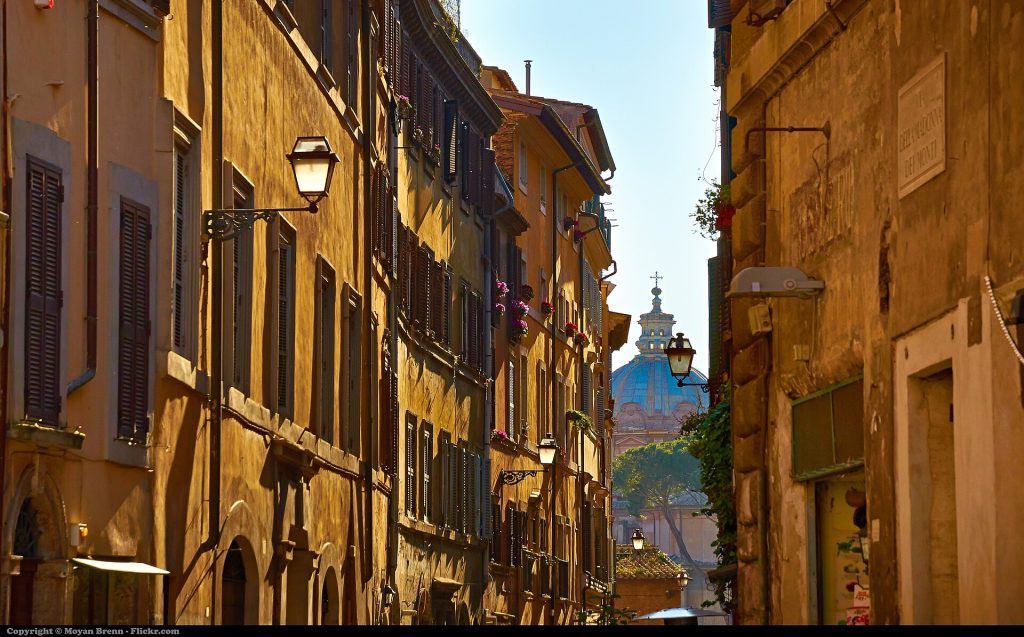
Monti can suit visitors who want proximity to the Colosseum and Forum area alongside restaurants and neighbourhood streets. It provides a different setting from the busiest classic-square circuit without removing the need to plan journeys elsewhere.
Treat it as a place you will use, not only a map label. A room near a favourite evening route can be worthwhile; paying for the district name while leaving early and returning late every day adds less obvious value.
Look at the exact route
Gradients, steps and the direction of your main connection matter. Check the walk from the station or drop-off point with luggage rather than judging a short distance on a flat map.
If Termini is part of the arrival plan, compare the actual final leg. Being broadly near the station and being immediately beside a convenient entrance are different advantages. You may still prefer a taxi for a group with cases, depending on the property.
Sleep and evening atmosphere
A lively street can be attractive at dinner and less useful at bedtime. Ask whether the bedroom faces a square, restaurant terrace or quieter side, and distinguish that from a general description of the neighbourhood as charming.
An interior room can reduce some street exposure but may have less light or face equipment. Request enough detail to choose the compromise you prefer rather than treating interior and quiet as synonyms.
When Monti is especially useful
For a trip with a substantial ancient-Rome day, the location can simplify the start and return. It can also suit visitors who want a central base that feels distinct from sleeping directly beside one of the most familiar fountains or squares.
Our four-day Rome itinerary gives other journeys to test, including the Vatican side and Trastevere. Choose the base against all those days rather than only the Colosseum morning.
Trastevere: stay for the evenings, accept the travel
Trastevere is appealing when eating out and spending time among its smaller streets are genuine priorities. It can suit repeat visitors, a slower stay or anyone who values returning to that setting more than the shortest possible walk to every major attraction.
It is also a well-known destination. Do not assume that its popularity with diners makes it quiet, inexpensive or uniformly residential in feel. The exact street and room orientation matter greatly.
The daily journey trade-off
Check how you will reach the ancient core, Vatican Museums and other booked visits. A walk may be pleasant once, but several daily crossings can become tiring if someone needs frequent room returns.
Public transport can make the location practical, but identify the actual stop and service rather than relying on a statement that the centre is well connected. Transfers, waiting and the final approach belong in the comparison.
For a family needing naps, think about whether your days naturally bring you back nearby. For a group happy to leave once each morning and return in the evening, the same location may work much better.
Noise deserves specific questions
Read recent comments for recurring mentions of street voices, music, terraces and cleaning or deliveries. One unusually loud night does not define a property, but repeated patterns are useful evidence.
Ask about the particular room category and whether windows need to remain open for comfort. Effective cooling can help you choose a quieter sleeping arrangement, while relying on an open window may expose the room to the activity you enjoyed downstairs earlier.
Arrival with bags
Trastevere station is not automatically beside accommodation in the familiar restaurant streets. Plot the final journey before choosing the regional airport train purely because the station name matches the district.
Our Fiumicino transfer guide distinguishes the rail options and the importance of the final leg. A direct car transfer may be useful for some addresses, but confirm where vehicles can actually stop.
Other locations can be right for specific needs
An area close to a useful transport hub can offer space, a conventional hotel layout or simpler luggage days. That can be more valuable than an atmospheric address for travellers with an early train, access needs or a short working visit alongside sightseeing.
Judge those alternatives by the routes you will repeat. A property a few stops from a landmark can still introduce station walking and changes that matter with children or limited stamina. Equally, a direct connection may make it easier than an apparently central but awkward hillside entrance.
Do not let one unusual morning determine every evening. Being ideal for a single early departure is useful, but not necessarily worth several days of inconvenient meals and returns.
Make a room-level shortlist
Confirm beds, usable space, cooling or heating, reception hours and luggage storage. Apartments require additional clarity about keys, cleaning, kitchen equipment and separate fees. A self-check-in can work well when its instructions and backup contact are reliable.
For accessibility, request the whole approach and bathroom layout. Historic architecture and a lift symbol cannot answer every practical question. Drivers should ask about parking and restricted access before arriving rather than following a navigation app into an unsuitable street.
Finally, compare arrival, a full sightseeing day and the return after dinner. Our Rome destination guide helps identify those daily clusters. A successful base is one that makes ordinary travel manageable and gives you an evening setting you want to return to, with a bedroom that lets you rest for the next day.
Three useful tests before deciding
For a couple on a first four-night visit, compare the room against a historic-centre walk, the ancient-core day and the Vatican journey. Centro Storico may make two of those routines pleasant on foot, while Monti can simplify the ancient day and provide an evening setting you enjoy. Trastevere may win if dinner there is an important repeated interest rather than a single planned outing.
For a family expecting an afternoon rest, count the return journeys explicitly. A larger apartment farther from the sightseeing cluster can look attractive until every nap involves another connection. A smaller but comfortable room in a convenient area may preserve more usable time, provided the sleeping arrangement genuinely works.
For a traveller with an early train, check whether a station-oriented base helps the whole stay or only the final morning. One arranged transfer can be preferable to several days of meals and sightseeing organised around a departure that happens once.
Compare food access as part of the room
Breakfast included in the rate can be useful, but check the timing and format if early reservations matter. A nearby bakery or café may provide more flexibility than paying for a service you repeatedly miss.
Apartments should be assessed against what you actually intend to cook. A small kitchenette may be enough for breakfast and snacks without supporting substantial meals. Clarify equipment and shopping access rather than treating the word kitchen as a uniform promise.
For late arrivals, identify a realistic meal option and how check-in works. A well-located room becomes less convenient when the final access code, reception contact or luggage approach remains unclear after a long journey.