Choose a Fiumicino transfer by the station or address you actually need. Leonardo Express is useful for Termini, the regional FL1 serves other Rome stations, and road options can simplify some final approaches. The fastest ride to one hub is not automatically the simplest journey to every room.
Allow for baggage collection, the walk to transport and the final city leg before comparing the options.
Leonardo Express: for Termini journeys
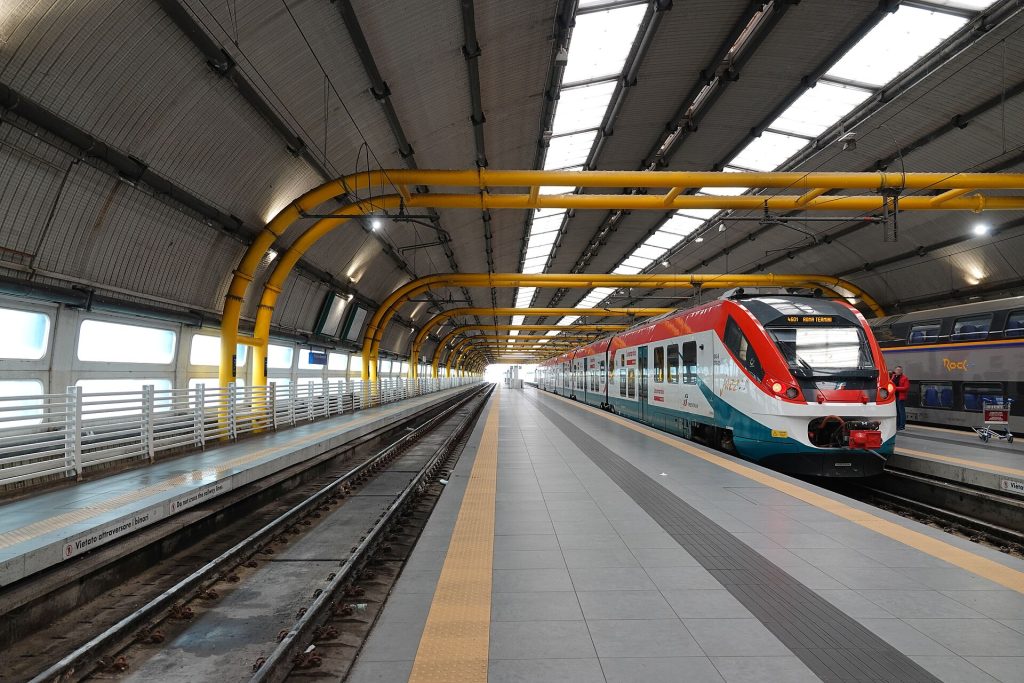
The non-stop airport train links Fiumicino with Roma Termini. It is a straightforward starting point when your accommodation or onward connection genuinely suits that station.
Use Trenitalia’s airport information for current tickets and services. Check the conditions of the ticket format you purchase, including any validation or travel-time requirement, rather than assuming every paper or digital product works identically.
Add the final walk, metro, bus or taxi from Termini. A direct airport train can still leave a complicated arrival if the room sits across the city or on a restricted street.
FL1 regional train: for other useful stations
The regional service can suit addresses connected with stations such as Trastevere, Ostiense or Tiburtina. It is a different route from Leonardo Express and does not serve Termini directly.
Compare the actual stop and onward journey before choosing. Trastevere station, for example, is not automatically beside accommodation in the familiar restaurant streets. The matching district name does not remove the final leg.
Check current services and ticket conditions for the date. If your journey includes another independently booked train, leave enough margin for the flight arrival process and any ordinary delay.
Coaches: compare the full schedule
Airport coaches can be useful where their city stop fits the plan. Read the departure location, luggage rules, operating hours and change conditions before buying.
Road traffic can affect the journey, so do not judge the choice solely from a sample ride time. A cheaper ticket may still be suitable, but the waiting and final city transfer should be included in the comparison.
For a late arrival, identify the service you can realistically reach after collecting bags. Landing before the last advertised departure does not guarantee you will be at its stop in time.
Taxi and prearranged transfers
Use the official taxi rank or the designated pickup arrangement for your booked service. Confirm the destination and applicable fare conditions, including the geographic limits of any official fixed fare rather than assuming it covers every address.
Ask the accommodation where a vehicle can stop. Pedestrian areas and restricted streets can leave a short final walk, which is worth knowing before unloading several cases.
For a private transfer, clarify waiting terms, flight-delay arrangements and the meeting point. Arrange suitable child restraints, wheelchair access or luggage capacity beforehand if essential.
Connect the choice with your base
Our Rome area comparison helps test the final approach to Centro Storico, Monti and Trastevere. Save the full address and contact details rather than relying on a property name alone.
For departure, work backwards from the airline’s recommended airport arrival time and add walking, waiting and any interchange separately. A final central coffee is more comfortable than squeezing in a distant sight and making the flight depend on every stage running perfectly.
Check which Rome airport appears on the flight booking. Fiumicino and Ciampino are separate arrivals with different transport arrangements; a guide for one should not be applied to the other merely because both flights are marketed as Rome. Save the correct return terminal and departure route alongside the hotel address.