Porto is best approached as a city of levels. The riverfront is the obvious visual focus, but many of the streets, markets and cultural visits lie uphill. Choose a base and daily routes that recognise the terrain, then let the Douro provide a setting for pauses rather than making every outing descend and climb again.
Three days gives a useful first visit, although including a Douro Valley excursion leaves less time for the city itself. With two days, concentrate on central Porto and Vila Nova de Gaia. Four lets you add the valley without treating the urban sights as a race between departure times.
Begin above the river
São Bento and the central streets
São Bento station makes a useful reference point for the centre, with its tile decoration giving visitors a reason to look beyond ordinary transport logistics. It remains a working station, so keep circulation clear and avoid blocking passengers while stopping for photographs.
From the surrounding streets, choose a compact route through the central area rather than immediately heading down to the waterfront. A café stop and a first look at the city’s gradients will help you judge what feels manageable later in the day.
The centre contains several distinct visitor interests within a relatively small area, but that does not mean every interior fits one morning. Choose the building or collection that matters most and leave the connecting streets unhurried.
Cathedral district and changing levels
The cathedral area offers another perspective on the relationship between the upper city and the river. If entering a religious building or another ticketed space, check the current visitor arrangements rather than assuming the exterior setting guarantees unrestricted access.
Look at the routes downhill before choosing one. Steps, narrow lanes and uneven surfaces can change the practical distance, especially with a buggy or anyone who prefers to avoid steep descents. A slightly longer, more straightforward route may be the comfortable option.
Ribeira: enjoy the waterfront without making it everything
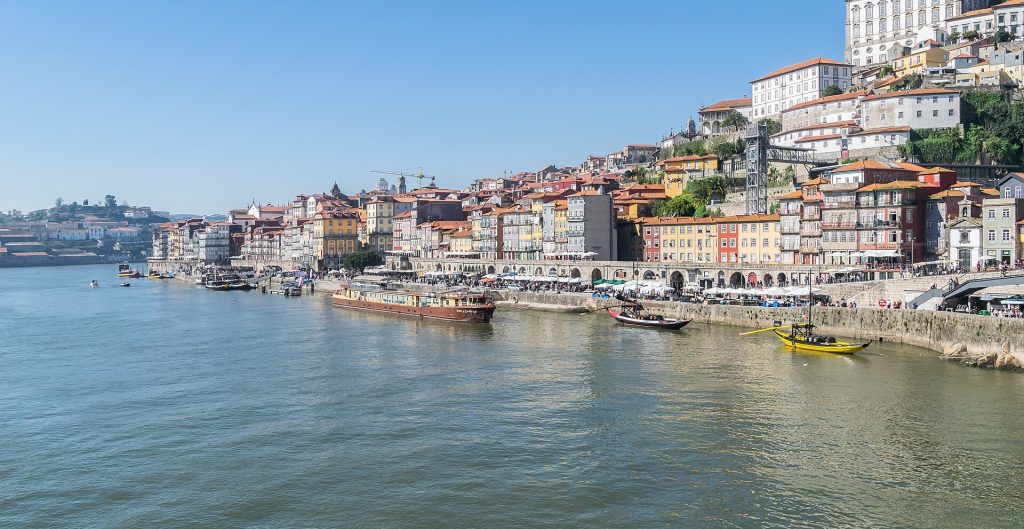
Ribeira provides the familiar riverfront scene, with buildings rising above the Douro and the bridge framing views. It deserves time for a walk and a pause, but it is also one of Porto’s most visited areas.
Choose a meal by the actual menu and setting rather than treating a river view as proof of quality. A waterfront table can be worth paying for if you want to linger; it adds less value when you intend to eat quickly and leave.
The return uphill matters if you are based elsewhere. Plan it before the group is tired, and use transport if that preserves an enjoyable evening. A riverside address can remove that return after dinner, but it may add climbs to ordinary sightseeing mornings instead.
Our Porto accommodation comparison explains why neither riverfront nor upper-city centrality is automatically the best choice for everyone.
Cross to Vila Nova de Gaia deliberately
The opposite bank provides a different view of Porto and is associated with the port-wine lodges. A cellar visit can be a useful introduction to production, storage and tasting, but choose the actual experience before booking.
Some formats are brief and introductory; others offer a more detailed tour or tasting. Compare language, group size, accessibility and what is included. A particular lodge’s reputation does not tell you whether its visit suits your interest or companions.
If travelling with children or anyone avoiding alcohol, check the non-tasting experience rather than assuming everyone benefits equally from a wine-focused afternoon. You can enjoy Gaia’s waterfront and outlook without making a cellar compulsory.
Keep the bridge crossing and route back part of the plan. The upper and lower levels create different journeys, so identify the route you intend to use instead of assuming every crossing ends at the same height.
Choose cultural visits by interest
Porto offers churches, tile traditions, museums and architectural spaces that can each give the day a different focus. The useful decision is which subject you want to spend time with, not how many celebrated interiors can fit between meals.
Serralves is a substantial outing if contemporary art, architecture or the grounds appeal. Casa da Música offers another cultural interest around Boavista, with its own programme and visitor arrangements. Neither is simply an extension of a short riverfront stroll.
Book the experiences that matter and compare their actual access. A performance, a guided architectural visit and general museum admission solve different interests. Avoid buying a package mainly because the building appears in every guide.
For a short stay, one cultural anchor per day leaves more attention for what you see. If the collections are the reason for coming, add time rather than making every stop a brief inspection.
Cedofeita and streets beyond the main river route
The Cedofeita area and surrounding upper-city streets provide another setting for shops, cafés and a less river-centred afternoon. They are useful when you want to spend time locally rather than move from one major attraction to the next.
Choose a few streets and leave room for something that catches your interest. The idea of a hidden street should not become a promise of solitude: Porto is a working city with residents, businesses and other visitors using the same lanes.
Keep private entrances clear and ask before photographing people closely. A quieter route is most enjoyable when it remains considerate of the neighbourhood rather than treating everyday life as a backdrop.
For accommodation, inspect the precise address and evening activity. A district associated with independent shops can still contain busy streets and rooms above restaurants, so sleeping conditions remain a property-level question.
Markets and food
Bolhão is an obvious place to consider for market interest, with individual stalls and food venues deserving attention on their own terms. Check trading arrangements for anything specific you want; a restaurant being open does not imply every produce business operates at the same time.
Porto’s food can support both short counter stops and substantial meals. Francesinha is a familiar introduction, but it is a rich dish rather than an obligatory snack before another large lunch. Fish, regional cooking and simpler café meals give the stay variety.
Read serving sizes and prices, especially when sharing. Ask about ingredients, sauces and stocks if dietary needs matter, rather than inferring everything from a translated menu title.
Our food, markets and wine guide helps combine these interests without making every day a succession of tastings. A seated meal can also be the practical break that makes the next hill feel reasonable.
Should you add the Douro Valley?
The valley is a different experience from the urban riverfront. It deserves a day with clear transport and one or two priorities, rather than an expectation that every vineyard, viewpoint and river activity can be combined.
Compare an independent rail-based outing with an organised day according to how much planning you want and which experiences matter. A scenic train journey, winery appointment and boat trip have different schedules; proximity on a map does not establish a seamless connection.
If wine is central, think about who will drive and whether the tasting arrangements suit the whole group. A visitor not drinking may still enjoy the landscape, but that is a reason to choose the day thoughtfully, not assume every package is equivalent.
Our three-day Porto itinerary with a valley excursion shows the trade-off. Adding a fourth day is the comfortable option when you want more city time as well.
Where to stay
Ribeira suits travellers who value waterfront evenings and are comfortable with its activity and the climbs elsewhere. Cedofeita is worth comparing for a different central-neighbourhood setting. Boavista can support cultural interests and transport-based journeys, though it is not the same as stepping directly into the historic riverfront.
Check the room orientation, entrance and lift, particularly in older buildings. A balcony photo does not tell you how far a vehicle can get with bags or whether stairs remain after the lift. Think about the return from dinner as well as the first morning’s sightseeing.
For a family, actual sleeping arrangements and nearby ordinary food can matter more than a famous postcode. For mobility needs, request concrete details of the route and property rather than relying on a general statement about central access.
Airport arrival and getting around
The airport’s metro connection is useful for many journeys, but the best final stop depends on your address and the gradient afterwards. Our Porto airport guide compares the complete arrival rather than treating a central station as the destination itself.
Within the city, walk in coherent clusters and use transport for moves that add little enjoyment on foot. Repeatedly descending to Ribeira and climbing back between unrelated bookings is a planning problem, not an unavoidable feature of every day.
Bring footwear with grip for slopes and surfaces that can become slippery when wet. The forecast should influence the length and order of outdoor walks, particularly if you plan bridge crossings and exposed viewpoints.
Let the season shape the rhythm
Mild periods suit a walk-heavy visit, while rain, heat and wind can change the appeal of a long outdoor circuit. Keep an indoor alternative that actually interests you rather than entering the nearest venue purely to maintain the pace.
Porto is most rewarding when you leave room to stop, eat and look across the river without another urgent departure. Choose a few strong experiences, organise them by level and district, and let the streets between them supply the rest of the visit.
A coastal alternative to another wine visit
If you want a different afternoon, compare a coastal outing around Foz or Matosinhos with another central admission. Choose the destination according to whether you want a waterfront walk, a meal or time near a beach, and check the actual transport and return.
The Atlantic setting offers a contrast to the Douro riverfront, but conditions still matter. Wind and sea exposure can change the appeal of a long walk or swim, so keep a shorter version available.
This option can be especially useful for a group with mixed interests. Visitors who have enjoyed one tasting may prefer open water and lunch to another wine-focused experience, and that is a sensible way to keep the stay varied.