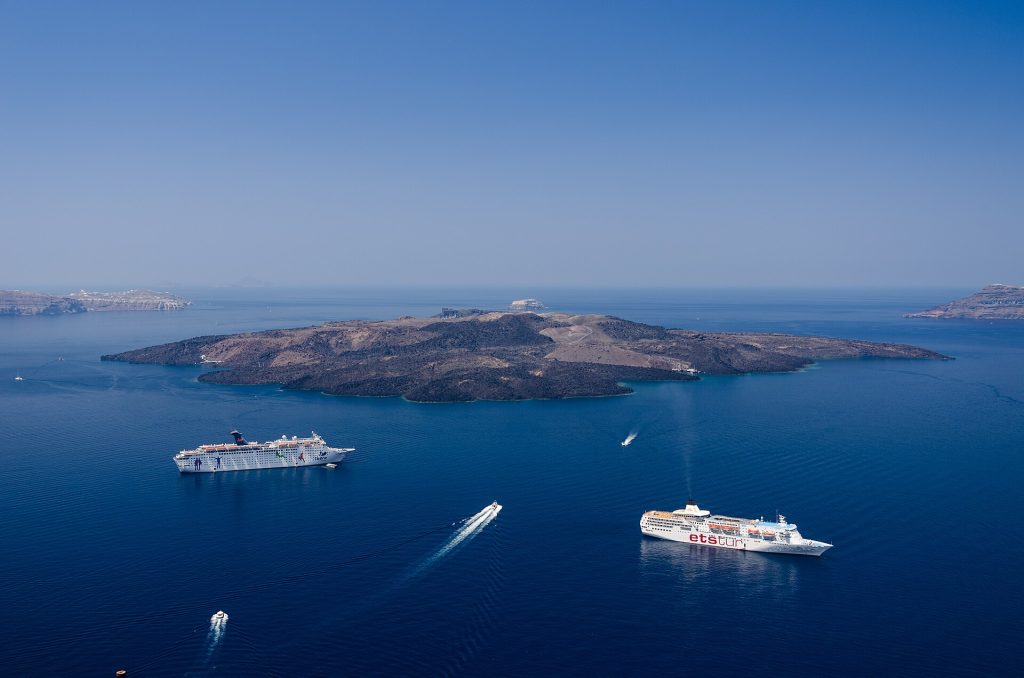
Santorini’s defining choice is between the caldera and the beach. The cliffside settlements face the volcanic basin, with views, stepped lanes and accommodation arranged around terraces. The eastern and southeastern resorts offer easier beach access and a different daily rhythm. You can enjoy both on one trip, but you cannot expect them to be the same place.
Allow three full days for a first visit, excluding arrival and departure if possible. That gives you time for the caldera villages, one cultural outing and a beach or boat day without making sunset the only event around which the island revolves.
Understand the island before booking
Fira is the principal town and a practical transport hub. Firostefani and Imerovigli extend north along the caldera rim, while Oia sits towards the northern end of the island. Kamari and the Perissa–Perivolos beach area face the open sea on the other side.
The airport and the main ferry port at Athinios are different arrival points. Athinios is also different from the old port below Fira, which visitors may encounter in descriptions of cruise calls and excursion boats. Confirm the precise port or landing place whenever arranging a transfer or activity.
Map distances are deceptive where cliffs and stairs are involved. A hotel close to the caldera can still be well below the nearest vehicle access. Likewise, a beach resort may be easy to move around locally but require a bus connection through Fira for another outing.
Fira: a useful first introduction
Fira combines caldera views with shops, restaurants, cultural visits and the island’s main bus interchange. It suits travellers who want a range of choices without arranging private transport for every meal.
Walk the public rim paths, then step away from the busiest frontage into the town. The Museum of Prehistoric Thera is worth considering if you want context for the island’s ancient settlements, particularly before or after Akrotiri. Check its opening arrangements and give the collections proper attention instead of treating them as a spare half-hour.
Fira’s atmosphere changes with the time of day and cruise activity. A crowded stretch at midday does not describe every street or every hour. If a lane becomes congested, take a break or return later rather than forcing your way through a queue for a photograph.
Firostefani and Imerovigli: time beside the caldera
The paths north of Fira lead towards Firostefani and Imerovigli, with changing perspectives across the volcanic basin. You can make a short walk and return the same way; a satisfying outing does not require completing the full route to Oia.
Imerovigli appeals to travellers who prefer a quieter cliffside stay, although no village is entirely separate from visitor activity. Restaurants and terraces are spread along stepped routes. Check the walk back to your accommodation if mobility, heat or darkness could be an issue.
Skaros and other exposed paths require more care than the main village lanes. Choose only routes that are open and suitable for your experience, and do not assume a view seen in a photograph guarantees safe access. Our guide to villages and walking trails offers gentler alternatives too.
Oia: enjoy it beyond the sunset bottleneck
Oia is known for white buildings, blue-domed churches and its position above the caldera. Visit for the streets and changing views, not simply to stand in one crowded place waiting for the sun to disappear.
Morning can work well for wandering before the busiest part of the day. Stay on public paths, respect signs and remember that terraces, roofs and church grounds may be private. The famous appearance of a place does not make every part of it a visitor viewpoint.
If sunset in Oia matters to you, decide how you will return afterwards before arriving. Buses and roads can be busy when many people leave together. A restaurant reservation may provide a more settled evening, but check the actual outlook and any spending conditions; not every caldera-facing table sees the sun set into the sea.
Inland villages: change the scale of the visit
Pyrgos offers a hillside village experience with narrow lanes and broad island views. It suits a slower morning with time to climb gradually and stop for a drink. The gradients remain real even though you are away from the caldera.
Megalochori provides another setting for village streets, courtyards and a meal away from the busiest rim paths. Choose one inland village and give it time rather than turning several into a string of brief stops. A guided excursion can simplify access if bus connections do not suit your day.
Neither village should be described as untouched by tourism. Their value lies in architecture, setting and the chance to explore a different part of the island, not in a promise that you will be the only visitor.
Akrotiri: a different reason to come
The archaeological site of Akrotiri preserves remains of a prehistoric settlement associated with the island’s volcanic past. Covered excavation areas and the scale of the structures make it a substantial cultural visit, quite different from a caldera walk.
Check official opening and admission arrangements before travelling south, especially outside the main season. Read a little background or consider a guide so that the site becomes more than a sequence of walls and walkways. Pair it with a relaxed lunch and one nearby activity, allowing for the return journey.
Do not confuse the archaeological site with every beach or viewpoint carrying the same area name. Some coastal approaches can be affected by unstable ground or restrictions. Follow local signs and current official advice rather than assuming a well-photographed path is open.
Beaches: choose for comfort as well as colour
Kamari and the Perissa–Perivolos area provide the clearest beach-holiday settings, with dark volcanic shorelines, restaurants and accommodation. Their appeal is a long, comparatively simple day beside the water rather than constant movement between cliffside sights.
Dark sand and stones can become very hot. Footwear helps on the shore, while swimming conditions, depth and entry vary by beach and day. Children need close supervision, and a beach’s popularity does not establish that it is shallow or sheltered.
Compare public space with paid loungers and facilities, asking what a charge includes before settling in. Bring water and sun protection even when cafés are nearby. Outside summer, assess the weather rather than planning a beach afternoon as a guaranteed swim.
Food, vineyards and boat outings
Before booking any activity, compare the pace with the rest of your stay. A sailing that occupies most of a day is a different choice from a short excursion, even if both descriptions emphasise the same caldera views. Likewise, a wine tasting with a guided explanation offers something different from an ordinary restaurant glass. Choose the format you want rather than counting activities. If travelling with children or someone prone to seasickness, discuss the proposed route and alternatives with the operator before committing to a non-refundable booking.
Look for dishes using local produce, including tomatoes, capers and the yellow split peas used for fava. Tomato fritters and vegetable preparations can provide variety, but check ingredients and portion sizes before assuming a series of small dishes will suit every diet.
Santorini’s vineyards provide another perspective on its dry landscape. If wine interests you, book a tasting that explains cultivation and local grape varieties. Plan transport independently of drinking: a tasting itinerary is a good reason to use an organised transfer or guided outing.
Boat excursions vary in route, vessel, group size and physical requirements. Confirm the departure port, transfer arrangements, shade, toilets and swimming conditions before booking. Volcanic-island landings or a swim from a boat are not suitable for every traveller. Wind can affect operations, so leave a flexible day if the experience is a priority.
Where to stay
Fira is the practical choice for buses, dining variety and a first visit without a car. Oia suits travellers who particularly want its setting and can budget for the room and transport that make the stay comfortable. Imerovigli often appeals to couples seeking a calmer caldera base.
The room details matter as much as the village. Ask how many steps separate vehicle access from reception and the room, whether the terrace is private and what the advertised view actually includes. A plunge pool may be overlooked from a public path, and a cave-style room may have limited daylight.
For a beach-centred holiday, compare Kamari and Perissa rather than assuming a caldera hotel is automatically superior. Our Santorini accommodation guide explains how to judge those trade-offs.
Getting around and choosing the season
Public buses can cover many main destinations, with Fira central to the network. Check the official KTEL timetable for your dates; services and connections should not be assumed to match a high-season schedule all year. A taxi or prebooked transfer can help with luggage, late arrivals or an awkward cross-island journey.
Renting a vehicle is optional for many first visits. Roads, parking and unfamiliar driving conditions can offset the freedom it provides. Walking works well on suitable village paths, but ordinary roads do not always provide a comfortable pedestrian alternative. See getting around without a car before choosing your base.
Summer brings the busiest beach atmosphere alongside heat and pressure on popular routes. Spring and autumn generally favour walking, though wind and rain remain possible. Winter has a much quieter rhythm, with fewer services and businesses operating; choose it for that experience rather than expecting the summer island at a discount.
Is three days enough?
Three full days suit a balanced introduction. Follow our unhurried three-day itinerary and add time if you want several boat trips, beach days or longer walks. Arrival logistics can consume a meaningful part of a short stay.
Do you need an expensive caldera room?
No. Public paths provide extensive views, and a comfortable inland or beach base can work well. Pay for a terrace only if you expect to spend enough time there to make it part of the holiday itself.