
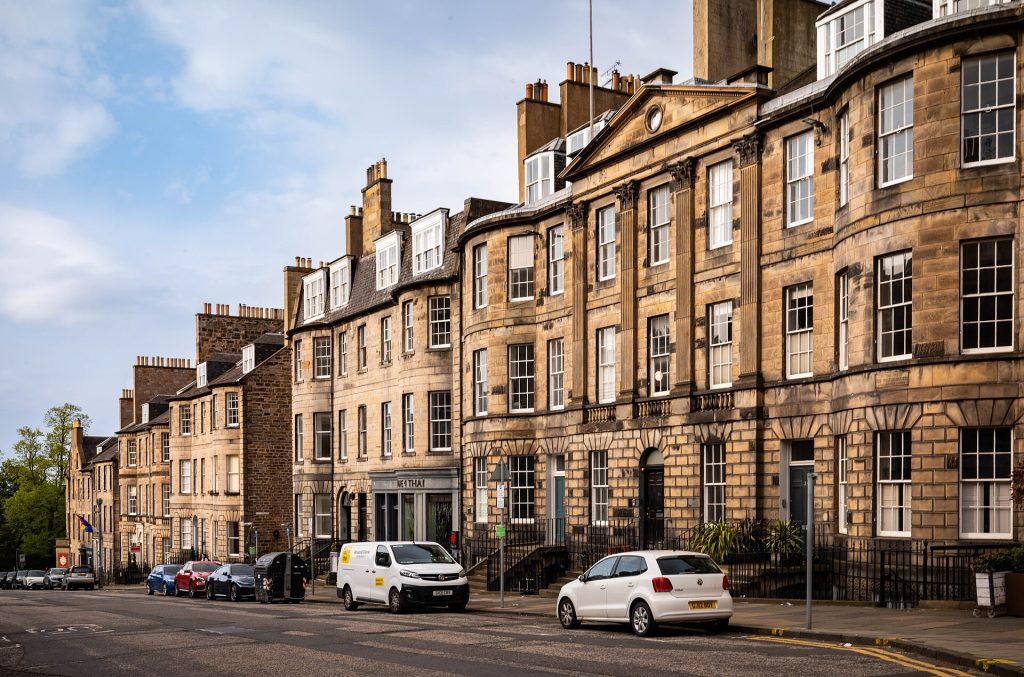
Edinburgh’s Old Town and New Town face each other across a central valley, but staying in them creates different daily routines. The Old Town puts historic lanes and the Royal Mile close by; the New Town offers Georgian streets, a broader spread of shops and useful transport corridors. Both can work for a first visit, provided you investigate the actual building and approach.
Choose your base around your likely evenings, walking ability and arrival point. A room that looks close to Waverley station may involve a steep final climb, while a quieter-looking New Town address may face a busy road. In Edinburgh, the vertical part of the journey deserves as much attention as the distance.
Compare the main choices
| Area | Strongest fit | Main advantage | Main trade-off |
|---|---|---|---|
| Old Town | Historic atmosphere, short first visits | Castle and Royal Mile sightseeing nearby | Cobbles, gradients, stairs and lively streets |
| Central New Town | City breaks, shopping, varied dining | Broad streets and useful central connections | Noise and hills still vary by address |
| Quieter New Town edges | Longer stays, a residential rhythm | More separation from concentrated sightseeing | Longer walks or bus journeys to some attractions |
The boundary is useful for orientation, not a promise about quality. A well-insulated Old Town room can sleep better than a room above a late venue elsewhere. Evaluate comparable rooms before deciding one whole district is better value.
Old Town: stay close to the historic city
The Old Town appeals when you want to step out into closes, old stone streets and the Royal Mile. Many major sights fall within a compact area, making it possible to return to your room between a museum and dinner.
For a two- or three-night visit, that convenience can justify paying more. It also suits travellers attending events nearby or wanting an evening atmosphere strongly connected with the historic centre. The benefit is greatest when you will actually spend time in the surrounding area.
The Royal Mile itself covers a descending route from the castle towards Holyrood. Accommodation near the upper end serves a different walking pattern from a property towards the lower end. Grassmarket and streets around the university create further variations in noise, dining and access.
Check the approach before the room photographs
Ask the property to describe the route from your arrival stop or taxi drop-off. Pedestrian lanes and closes can involve steps, and a front entrance on one level may not match a map route approaching from another.
Inside, older buildings can have stairs, narrow lifts or no lift at all. Confirm the floor and any steps before reception or between the lift and room. A porter can help with bags, but does not solve the daily journey for someone with limited mobility.
Families with pushchairs should check storage and circulation space. Travellers with walking difficulties may prefer a property on a straightforward street approach, even if it is slightly further from a headline attraction.
Noise depends on the street and room
The Old Town includes busy bars, restaurants and event routes. That can be enjoyable when you want an active evening; it can be frustrating when you want to sleep early. Ask about room orientation, glazing and nearby late-opening venues.
An internal-facing room may reduce street noise but have less light or face service equipment. Check both aspects rather than accepting the word quiet without detail. During festivals, activity can extend beyond the usual nightlife streets.
New Town: a different kind of central stay
The central New Town suits travellers who prefer wider streets and Georgian architecture while retaining access to central sights. Areas around Princes Street and George Street can be practical for shopping, meals and onward city travel.
It works well for a mixed visit where the Old Town is one sightseeing cluster among several, rather than the setting for every meal and evening. You can walk across to the historic ridge and return to a different atmosphere at the end of the day.
Do not interpret the planned street grid as a guarantee of level walking. Routes towards the northern parts of the New Town involve slopes, and a comfortable outward descent can become a tiring return after dinner. Test the route from each shortlisted address.
Central streets or a residential edge?
The most central streets simplify transport and spontaneous meals but may bring traffic and commercial activity. A property further into residential terraces can feel calmer, with a longer walk to the station or Royal Mile.
Choose that trade-off deliberately. For a longer stay, neighbourhood shops and a quieter evening setting may matter more than being nearest to a major attraction. For one or two nights, repeated extra walks with luggage or tired children may outweigh the atmosphere.
Check parking and drop-off separately if arriving by car. An elegant street does not establish that a property has a parking space, and a quoted parking option may use a separate garage. Obtain directions and the full charge before arrival.
Building character still brings practical questions
Converted Georgian buildings can have impressive public rooms alongside compact bedrooms or several flights of stairs. Ask about the actual room category and floor. Basement and upper-floor rooms may differ substantially from the bright front-facing rooms in promotional photographs.
For apartments, check heating controls, window access and the location of sleeping spaces. Edinburgh stays often involve wet coats and shoes, so a little practical storage can improve a family visit. A large advertised floor area does not guarantee that everyone has a private sleeping space.
Consider the edges without losing track of the journey
Stockbridge can suit travellers who want cafés, shops and a more residential routine, especially on a longer stay. It is not the same location as central New Town accommodation; compare the uphill journey back to central sights and available buses.
Haymarket and western city addresses can provide practical rail or tram access. They may work well for arrivals and offer different prices, but assess how many daily journeys your itinerary creates. A lower rate is useful only if the total cost and travel remain acceptable.
Leith is another distinct base with its own dining scene and transport links. Choose it because you want that setting and have checked the connections, rather than assuming it is interchangeable with a central Old Town room.
For most short first visits, one base is enough. You can explore different neighbourhoods without repacking and waiting for a second check-in.
Festivals can change the booking decision
Edinburgh’s major festivals affect availability, prices and the feel of streets well beyond individual venues. Check the calendar before treating a summer rate as typical or assuming a normally quieter area will remain that way.
If attending performances, plot the venues you will use most and the routes after late finishes. A room convenient for your actual programme can be worth more than a broadly central location. Leave margin between checkout, luggage collection and a final show.
If you are not attending, consider whether another date gives you a better balance of cost and atmosphere. Do not book inflexible accommodation merely because other options appear to be disappearing; compare the cancellation terms and the complete stay carefully.
Budget, breakfast and the room you need
One night, three nights or a full week?
For one night, prioritise a straightforward arrival, luggage storage and the one evening you want to enjoy. A room requiring several connections or an uncertain self-check-in can consume too much of a short visit. Being within a comfortable walk of the station or your final activity may be worth a higher rate.
For three nights, choose around your sightseeing pattern and sleep needs. You have enough time to appreciate a neighbourhood, but not enough to make repeated unnecessary journeys feel insignificant. A central base that supports afternoon rests can work well for mixed-age groups.
For a week, laundry, storage, seating and nearby food shops become more important. An apartment may offer those advantages, provided the equipment and help arrangements are clear. Check who handles a problem outside ordinary hours and whether someone can assist if access instructions fail.
Think about the departure day
Ask how long luggage can remain after checkout and whether collection requires reception to be staffed. If your final activity lies elsewhere, factor in the return to collect bags before heading to the airport or station. A property that solves the first arrival but complicates the final day may not be the best overall base.
For early departures, compare the room’s quietness with access to transport. A slightly longer morning transfer can be preferable to several nights above a busy venue, while an extremely early flight may justify arranging a direct car in advance.
Compare rates including breakfast if you expect to eat at the property. A room-only stay near cafés can work well, while early departures or children may make an included breakfast convenient. Check serving times before paying for something you cannot use.
Family rooms should be compared by real beds and usable space. Confirm whether connecting rooms are guaranteed and whether a cot is available for your dates. For groups, inspect bathroom arrangements and whether every bedroom has a proper door and window.
Light sleepers should prioritise specific room information over a neighbourhood reputation. Travellers with access requirements should request the full pavement-to-bedroom route, bathroom details and confirmed availability of the appropriate room. General filters cannot answer all of those questions.
Choose with your arrival and ordinary day in mind
Waverley station has multiple approaches, and a convenient exit for one property may be wrong for another. Airport trams and buses also stop in different places. Use our airport transfer comparison to check the last leg before booking.
Then imagine a normal day: leaving for the castle, returning after a museum, and heading out for dinner. Use the Edinburgh travel guide to identify your priorities and compare them with each address. The right base should make those repeated journeys comfortable, not simply place a famous district name on the reservation.