In Dubrovnik, choosing where to stay means choosing how often you want to climb, travel and return to the historic centre. The Old Town provides atmosphere and walk-home evenings; Lapad supports a beach-and-sightseeing routine; Gruž favours transport and a more functional harbour base. The right area depends on the ordinary day you want, not simply the most impressive photograph.
Start with your luggage, walking ability and likely arrival point. Then compare the actual route to each property. A room just outside the walls can involve more stairs than one much further away beside a useful bus stop.
Compare the three areas
| Area | Best suited to | Main benefit | Main consideration |
|---|---|---|---|
| Old Town | Short historic stays, evening atmosphere | Sights and restaurants within the walls | Pedestrian access, steps, noise and compact rooms |
| Lapad | Families, beach time, longer holidays | More varied resort-style routines | Exact beach and bus access vary by address |
| Gruž | Ferry travellers, practical stays, transport connections | Main harbour and bus facilities nearby | Working-port setting and travel to the Old Town |
None is automatically inexpensive or quiet. Summer demand, room category and the building’s immediate surroundings can matter more than the broad district. Compare similar rooms and cancellation terms before judging value.
Old Town: the strongest historic setting
Stay inside the walls if early walks, old streets and dinner without a bus ride are central to the trip. A short visit can feel less rushed when you can return to the room between sights and come out again after the busiest hours.
The area suits travellers who appreciate historic buildings and accept some practical compromises. It is particularly appealing when most of your visit will focus on the centre rather than daily excursions from Gruž or long beach afternoons elsewhere.
Stradun and the lower central streets provide a different approach from lanes climbing towards the walls. A listing can truthfully describe itself as inside the Old Town while requiring several steep stair flights. Ask for the route from the gate you will use, ideally with a clear description of each stepped section.
Luggage and arrival arrangements
Vehicles do not deliver you to every Old Town door. Confirm the best gate, meeting point and final walk before arranging an airport transfer. If luggage assistance is offered, check whether it is included, how to request it and what happens if your arrival is delayed.
Porter help solves only the arrival and departure bags. You still need to climb the route during the stay. Anyone with mobility limitations should consider whether that daily journey is realistic rather than treating assistance as a complete access solution.
Self-check-in can work well, but obtain instructions before travelling and keep a contact number available. Narrow lanes and similar-looking entrances are less straightforward to navigate when tired, carrying bags and relying on a weak signal.
Noise, space and the historic building
Restaurants, bars, deliveries and voices on stone streets can affect sleep. Ask about the room’s orientation and glazing, particularly if you need an early bedtime. A quiet-looking lane in a daytime photograph may have a different evening character.
Older buildings can have narrow stairs, small bathrooms and limited storage. Verify the room category, floor and cooling arrangements. For apartments, check whether every advertised sleeping space is a separate bedroom or whether someone sleeps in the living area.
The Old Town is less automatic for families with bulky pushchairs, travellers expecting a large pool or visitors who want to drive to reception. It remains possible to find a suitable stay, but the access and layout questions should come first.
Lapad: balance sightseeing with the sea
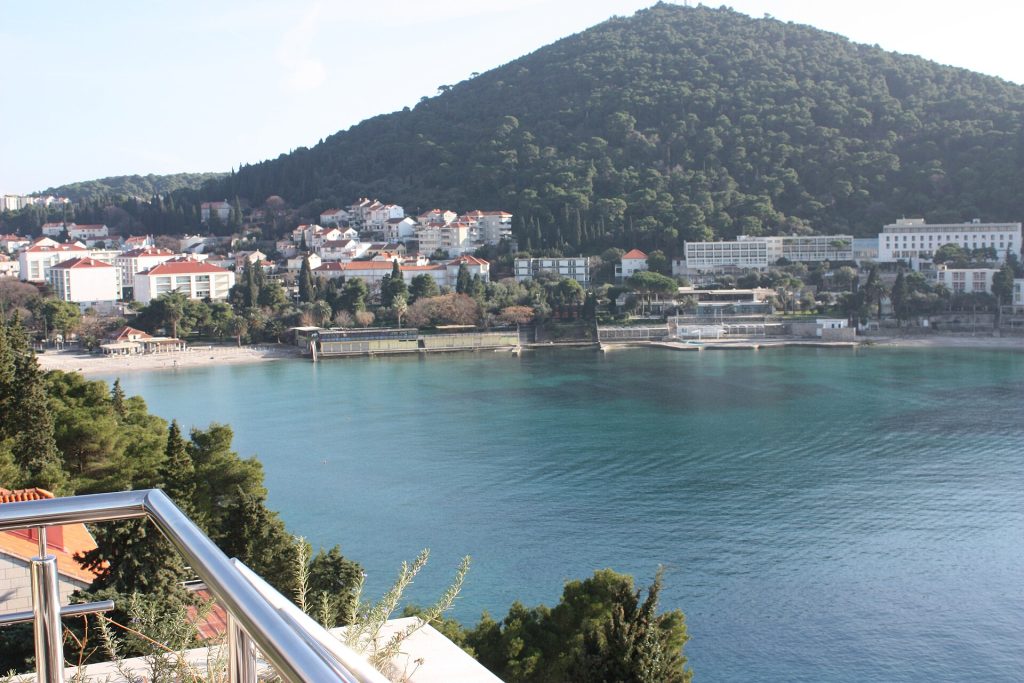
Lapad works well when your holiday includes repeated beach time, relaxed meals and occasional trips into the Old Town. It offers a broader spread of hotel and apartment settings than the confined historic centre.
Families and travellers staying several nights may value that flexibility. A room near a suitable beach and useful bus stop can make the daily routine easier than returning through crowded gates after every swim. Larger hotel facilities may also appeal, provided you check the actual property rather than assuming them from the district.
The word Lapad covers a substantial area. Addresses near the bay, residential slopes and other parts of the peninsula involve different walks. Locate the beach you intend to use and inspect the approach between it and the room.
Beach access is more than a distance
Ask whether the route involves steps, a steep road or an accessible promenade. A property can be near the water without providing an easy swimming entrance. The nearest shore may be rocky, exposed or unsuitable for the children in your group.
Check whether beach facilities are public, paid or linked to the hotel, and what is included in the room rate. A pool photograph does not establish seasonal opening, heating, supervision or access for every room category.
For a longer beach holiday, shade, laundry and nearby shops can matter as much as the view. If booking an apartment, confirm cooking equipment and whether there is space to dry towels without compromising the room’s comfort.
Travel to the Old Town
Use the Libertas route information to check the bus from the actual address. Look at the return after dinner, not just the outward journey at midday. Service patterns, traffic and the walk from the final stop all contribute to convenience.
Do not plan to walk every journey simply because the distance appears manageable. Road gradients, heat and the route itself can make that less comfortable than expected. A bus-based stay can work very well when chosen deliberately and given enough time.
Gruž: put practical connections first
Gruž suits travellers using the main harbour, arriving by intercity bus or building a stay around onward transport. It can also appeal to visitors who prefer a working district to a purely sightseeing setting.
The harbour area has everyday shops and food options, but the atmosphere differs from the Old Town. Stay here for practical reasons or because you like that setting, rather than expecting the same evening scenery as inside the walls.
Accommodation higher above the waterfront may provide views with a substantial climb. A property described as near the port should be checked against your exact terminal, stop or berth. Port facilities occupy a broader area than a single map pin suggests.
Useful for departures, with limits
For an early ferry, staying near the correct departure area can reduce stress. Confirm the vessel’s actual port and boarding location before choosing the room. Not every boat advertised as leaving Dubrovnik uses Gruž; some excursions and island services use the Old Harbour.
Check luggage storage if your arrival or departure leaves several hours between transport and room access. An apartment host may not have a staffed place to keep bags. A hotel with reliable storage can be worth more than a small nightly saving.
Harbour views can include ferries, traffic and working activity. Ask about room orientation and noise if those would affect your enjoyment. What one traveller finds interesting can be an interruption for someone seeking a quiet retreat.
Consider properties just outside the gates carefully
How long will you stay?
For one or two nights focused on the walls and historic interiors, a practical Old Town or gate-adjacent address can save repeated journeys. It may be worth accepting a smaller room if the access works and you will spend most of the day outside. Confirm bag storage to make the arrival and departure days useful.
For a week, Lapad’s beach routine and broader spread of accommodation may become more valuable than proximity to Stradun. Look at the restaurants and shops you would use repeatedly, as well as the sightseeing bus. Having somewhere comfortable to sit indoors matters more over several days than it does during a brief stop.
For a stay built around onward ferries, Gruž can be the most sensible choice, but do not split a short visit merely to sleep near a departure once. Compare a single confirmed transfer with the packing, checkout and waiting involved in moving properties. Changing bases makes more sense when each supports a substantial part of the trip, rather than when the second booking only solves one morning journey.
Accommodation around Pile or Ploče can combine proximity with vehicle access, but the details vary sharply. Some routes are straightforward; others climb steeply above the coast. Check the full walk instead of assuming outside the walls means easier.
These addresses can be excellent for a short visit when they match your needs. A sea-facing terrace may justify a premium, while another property nearby may offer better access at a lower rate. The useful comparison is between actual routes and rooms, not two broad map circles.
Budget for the whole visit
Compare the complete room cost with breakfast, local charges, transfers, parking if required and likely city journeys. A lower rate can lose its advantage through repeated taxis, while an expensive central room may save time without eliminating every transport cost.
If you have a car, confirm the parking location, access and charge in writing before arrival. A space may be separate from the property and require a further walk with luggage. Do not assume parking information in a general listing applies to every booking.
For summer, cooling and sun exposure matter. A terrace with no shade may be less usable than expected, and a panoramic room can become warm without effective cooling. Outside the main season, ask which facilities and nearby services will operate during your dates.
Match the booking to your travellers
For families, confirm actual beds, child policies and safe access to terraces or pools. For older travellers or anyone with mobility needs, obtain a pavement-to-room description and bathroom details. A filter saying accessible is only a starting point.
For a brief first stay, prioritise a comfortable route and a room you can use between visits. For a longer holiday, give more weight to living space, laundry and everyday shops. Use the Dubrovnik travel guide to choose your priorities, then test each location against them. The best base is the one that makes returning at the end of the day feel easy.