Mallorca becomes a more interesting trip when you stop treating its coastline as a row of interchangeable resorts. Palma has enough architecture and food to justify a city stay; the Serra de Tramuntana brings stone villages and mountain roads; the north combines historic towns with broad bays. Choose which version of the island matters most, then organise the beaches around it.
A week allows a useful introduction without changing accommodation every night. With three or four days, concentrate on Palma and one other area. The island is not enormous, but winding roads, parking and summer traffic make ambitious daily circuits less relaxing than they appear on a map.
Begin with Palma rather than bypassing it
Cathedral streets and the old town
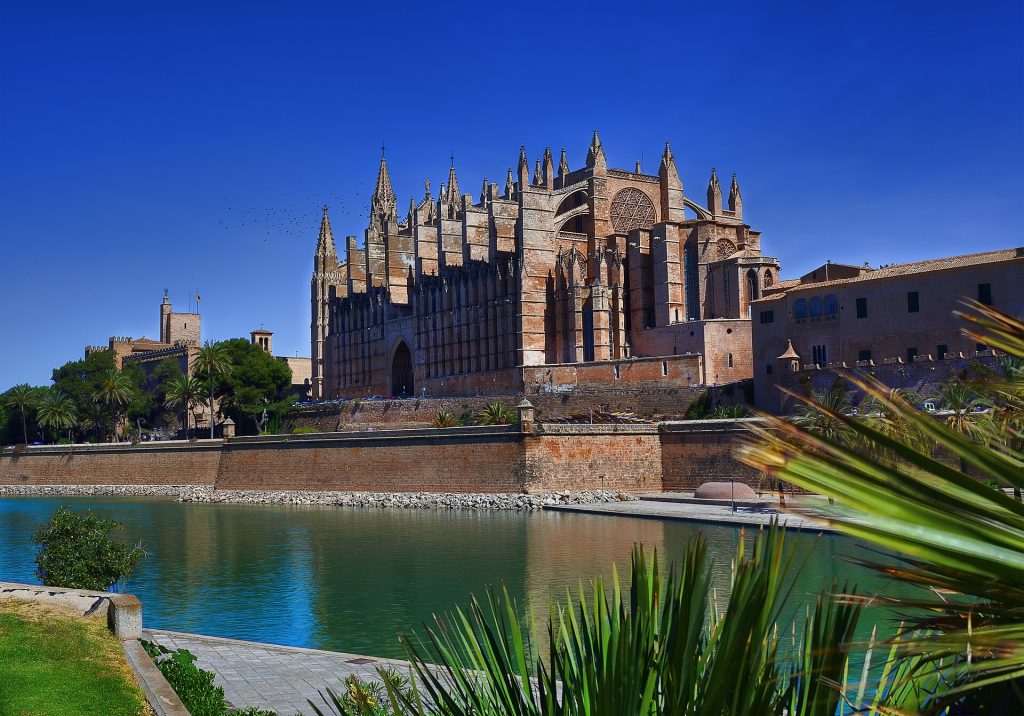
Palma’s cathedral gives the waterfront a distinctive silhouette, but its setting is only the beginning of a worthwhile walk. Explore the old streets behind it, where courtyards, churches and residential buildings create a different scale from the seafront. You can appreciate the district without making every doorway a paid visit.
Choose one substantial interior if architecture interests you, then leave time for the surrounding streets. Religious buildings and museums have their own visitor arrangements, so check the specific venue before fixing a booking. Do not assume a morning arrival leaves an entire sightseeing day after luggage and check-in.
Markets, neighbourhoods and the waterfront
A market visit works best when you are interested in what is being sold, not only its appearance. Look for a place to eat or buy something for later, remembering that individual stalls may close before nearby restaurants. Santa Catalina offers another area for food and evening time beyond the cathedral cluster.
The waterfront is useful for orientation and a gentler walk after the old town. Palma is a working city as well as a visitor destination; its value lies partly in being able to combine culture, meals and everyday streets without needing a car for every outing.
Understand the Tramuntana landscape
The Serra de Tramuntana follows Mallorca’s northwest, with steep ground, terraces and roads that connect villages rather than simply leading to beaches. Its beauty comes from the relationship between landscape and settlement: olive groves, stone walls and compact towns occupy terrain that makes transport slower and walking more demanding.
For a first visit, choose a few stops instead of trying to traverse every scenic road. Valldemossa, Deià and Sóller each deserve more than a photograph from the nearest parking space. A meal or a short walk can reveal more than adding another name to the day’s route.
Mountain weather and road conditions can differ from those on the coast. Carry suitable footwear and an extra layer outside the hottest months, and avoid starting an unfamiliar walk without knowing its length and terrain. A village stroll and a mountain hike are different commitments.
Valldemossa and Deià: slow the circuit down
Valldemossa makes an appealing introduction to the mountains, with stone streets and the charterhouse associated with Chopin and George Sand. Decide whether you want a cultural visit or mainly time in the town, then build the stop around that choice. The two experiences take different amounts of time.
Deià offers another mountain setting, with houses climbing the hillside and coastal views nearby. It is small, popular and residential. Use designated parking, keep entrances clear and resist stopping a car on a bend because a photograph looks promising.
Combining both places is reasonable when you keep the rest of the day selective. Adding Sóller, a distant cove and a full mountain drive afterwards can turn a pleasant outing into a search for somewhere to stop. Our villages and mountain drives guide helps choose a manageable route.
Sóller and Port de Sóller are different bases
Sóller sits inland in a valley, with a central square and streets that suit an unhurried stay. Port de Sóller is the coastal counterpart, arranged around its bay. Staying in one is not the same as staying in the other, particularly if you expect to walk to the beach before breakfast.
The historic railway and tram are part of the area’s appeal, but they should be treated as transport experiences with their own tickets and schedules rather than assumed everyday shortcuts. Check the operator’s current arrangements if riding them is a priority.
Allow time to enjoy the valley and the waterfront separately. A morning in town followed by the port is a satisfying day without another major drive. For accommodation, compare the evening setting as well as the daytime attractions: an inland square, a seafront promenade and a secluded rural property create very different stays.
The north: Alcúdia, bays and a broader horizon
Alcúdia’s walled old town works well for a walk through streets and squares, while Port d’Alcúdia is the coastal resort area. Check the exact address when booking: the shared name can conceal a very different relationship to the beach.
The wider bay offers space for beach-focused days, with facilities varying by stretch. This can suit families who want easy access to the sand and meals without using the car repeatedly. It also provides a practical counterpoint to mountain days, when everyone may appreciate a flatter outing.
Pollença is another inland town worth considering if you enjoy a neighbourhood walk and a meal rather than a full day on the beach. Avoid making the north a rapid circuit of every town and lookout. Choose a base, then use nearby excursions to vary the week.
Choose beaches by the day you want
Broad sandy bays and smaller coves solve different needs. A family wanting toilets, simple access and room to settle is choosing a different outing from someone happy to walk down an uneven path with everything needed for the afternoon.
Before setting out, consider parking, the approach on foot and whether there is shade or food nearby. A small cove can become uncomfortable when crowded, and a beautiful photograph does not reveal the climb back to the car. Keep a larger beach as an alternative if access is difficult.
Check local conditions and flags before swimming, and do not assume calm water at one bay means the same conditions elsewhere. Leave no valuables unattended, take rubbish away and keep clear of restricted areas. An enjoyable beach day does not depend on reaching the most photographed patch of sand.
Food beyond the resort buffet
Mallorcan food provides useful reasons to linger over lunch. Look for dishes such as tumbet, built around vegetables, or arròs brut, a seasoned rice dish, and ask what a particular kitchen prepares. Sobrassada and ensaïmada offer other familiar introductions, though ingredients and serving styles deserve attention if you have dietary restrictions.
Markets, bakeries and simple town restaurants can give the week variety without turning every meal into a reservation. Plan the meals that matter and keep others near the day’s route. Driving across the island for a merely adequate lunch rarely improves a short stay.
If buying food for a walk or beach outing, carry enough water and choose items that cope with the conditions. A quiet roadside picnic stop is only useful when parking is legal and the location is safe; do not improvise on a mountain shoulder.
Do you need a car?
A Palma-centred break can work without one, especially when your other outings follow established public-transport routes. A week combining mountain villages, rural accommodation and several coastal areas is more flexible with a car, but that flexibility comes with parking and driving responsibilities.
Rent only for the days when it adds value. Keeping a vehicle while exploring Palma on foot can mean paying for something that mostly sits in a garage. Our Mallorca car-rental guide explains the practical decisions before booking.
Seasonal road restrictions can affect particular scenic areas, especially around Formentor. Check the current access arrangements before departure rather than relying on a saved route. If access is controlled, use the permitted transport option or choose another outing instead of driving towards a closed section.
Where to stay and how to divide a week
Palma is the strongest starting point for culture, food and a short stay without constant driving. Sóller suits a mountain-valley base, with the port an alternative when waterfront evenings matter. Alcúdia and its coastal area make sense for a northern stay with regular beach time.
For a week, two bases usually offer enough variety without turning every other morning into packing. Our seven-day road trip gives a practical progression, while the accommodation area comparison explains who benefits from each location.
Compare the complete room and arrival arrangements. A rural property may need a car for dinner, a village hotel may have no adjacent parking, and a seafront room may face evening activity. These are trade-offs to understand before paying, not reasons to rule out an entire area.
Match the season to the trip
Summer is the obvious choice for a beach-led holiday, but it also brings greater pressure on popular roads and small parking areas. Start busy excursions earlier and leave room for a simpler afternoon. In the shoulder seasons, walking and village time can take a larger role, though swimming conditions and weather remain variable.
Outside the main holiday period, check accommodation, transport and dining availability for the places you intend to use. An island stay in a quiet village is appealing only if the practical services you need are operating. Mallorca works best when the season, base and daily ambitions support the same kind of trip.
For a quieter inland contrast, consider a town such as Sineu on a day when the mountains or beach are less appealing. Choose a meal and a short walk rather than another full island circuit.