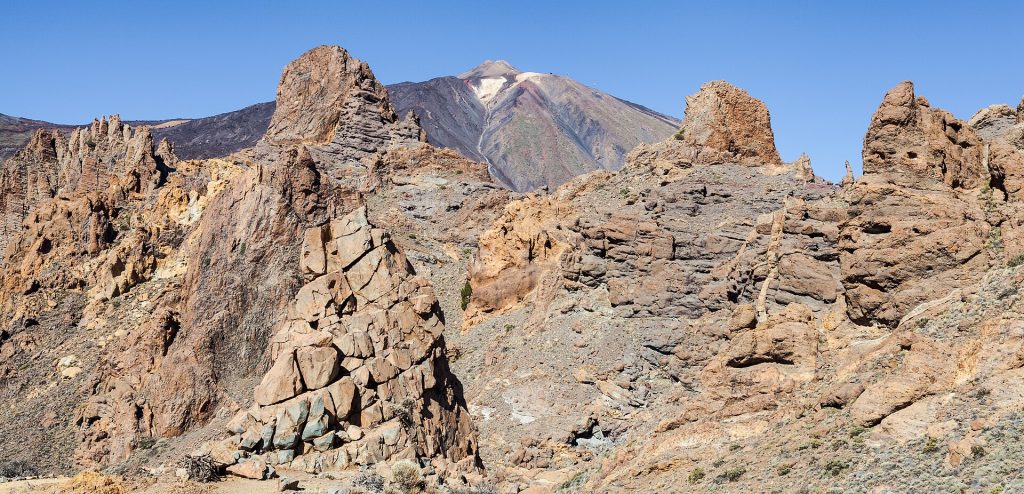
Teide National Park is worthwhile without reaching the summit. Its volcanic scenery, changing rock formations and broad upland views can support a satisfying day through selected stops and a suitable walk. The first decision is what kind of visit your group actually wants, not which ticket to buy.
Treat the park as a high-altitude outing. Conditions, exertion and access requirements differ from those of a coastal promenade or resort beach day.
Choose a road-based introduction
A drive through the permitted roads with designated viewpoint stops is a useful starting point for visitors who want to understand the landscape without a long hike. Choose a limited sequence rather than stopping at every possible lay-by.
Allow the driver to enjoy the scenery too by planning proper pauses. Do not stop on bends or road shoulders merely because the mountain appears between the clouds. A safe designated stop is a better photograph opportunity than an improvised obstruction.
At each stop, look beyond the summit itself. Different lava textures, colours and the scale of the caldera help explain why the wider park deserves attention. A day spent chasing only one viewpoint can miss much of the landscape around it.
Select a walk by terrain and conditions
A short route still needs preparation
Choose a trail whose current access, length, surface and altitude fit the least confident member of the group. A short distance does not guarantee an easy walk where the ground is rough, exposed or high above sea level.
Carry water, sun protection and layers, and understand how you return to the starting point. Do not follow an unfamiliar branch of a trail simply because another group takes it. Clear route information matters more than an appealing photograph.
Check controlled access
Some paths and high-mountain activities can involve permits or reservations. Check the current official requirements for the precise route, including any additional rules linked to the time of day or activity.
If you cannot confirm access or suitability, choose a more straightforward visit instead. There is no need to frame a road-and-viewpoint day as a lesser experience when it is the right match for the group.
Cable car and summit are separate decisions
A cable-car experience can provide access to a different viewpoint, but it does not automatically include permission to continue to the summit. Read the conditions of the actual product and the separate route requirements before assuming one booking covers everything.
Weather can affect operation. Keep the day flexible and understand the cancellation or rebooking conditions before paying for related transport. A reservation is not a guarantee that conditions will permit the activity.
The higher elevation also makes this a different physical environment. Consider any relevant health needs before choosing the outing, and follow the operator’s current advice about suitability. A visitor who enjoys ordinary city walking may still prefer a lower-altitude plan.
Dress for the uplands
The temperature outside your coastal accommodation is not a reliable packing guide for the park. Wind, sun and temperature changes can make both warm clothing and sun protection relevant during the same day.
Wear footwear with grip and bring what you need without overloading the group. Families should plan snacks and breaks, checking where eating is permitted rather than assuming every stop has a café immediately nearby.
If someone becomes uncomfortable, reduce the activity rather than using the booking as a reason to continue. The park can be enjoyed from a shorter route, and the descent or drive back remains part of the day.
Photography and a slower look
Build time to stop and observe the wider setting without constantly moving towards the next landmark. The relationship between the mountain, rocks and open space is easier to appreciate when you are not continually checking the next turn.
Stay on permitted routes and avoid climbing onto delicate or restricted formations for a better frame. What appears harmless in a photograph can cause damage when repeated by many visitors.
For an evening or night activity, organise the route, clothing and return separately. Do not assume a scenic daylight drive provides enough preparation for navigating the same area after dark.
Fit Teide into the wider stay
Give the outing a substantial block of time and keep the evening simple. A long coastal transfer, high-altitude activity and another distant village circuit can make the day more demanding than expected.
Our seven-day Tenerife route leaves room to move Teide according to conditions. If you are still choosing accommodation, compare the north and south against the whole week rather than making one park visit determine every other day.
A successful visit is one that matches the activity to the people and conditions. The summit may be the right goal for a properly prepared visitor, but it is only one possible way to experience this volcanic landscape.
For mixed-interest groups, agree the main activity before leaving the coast. Some visitors may want a short landscape walk while others expect a high-mountain challenge. Trying to negotiate those different plans at the trail entrance can leave everyone with an outing they did not prepare for.