Eating well in Seville starts with understanding how you want the meal to work. A few tapas at a counter, a seated lunch and a long dinner are different experiences, even when some dishes overlap. Choose the format that suits your day, order gradually and leave room to change your mind.
You do not need a list of famous establishments to make useful choices. A clear menu, manageable portions and a place where you can enjoy the food are better starting points than a queue you feel obliged to join.
Understand the portion sizes
A tapa is generally a small serving, while a media ración and ración are larger portions, often suitable for sharing. Sizes vary by establishment, so ask before ordering several dishes for the table. The same food can be a snack in one format and a substantial part of lunch in another.
Start with two or three choices between a couple, then decide what else you need. This avoids having hot dishes arrive together while you struggle to finish them. Check whether bread or other extras carry a charge rather than assuming every item placed on the table is included.
Tapas are not universally free with a drink. Read the menu and ask about anything unclear. It is easier to understand the bill when you know the serving format and price at the start.
Dishes worth looking for
Vegetables and cold plates
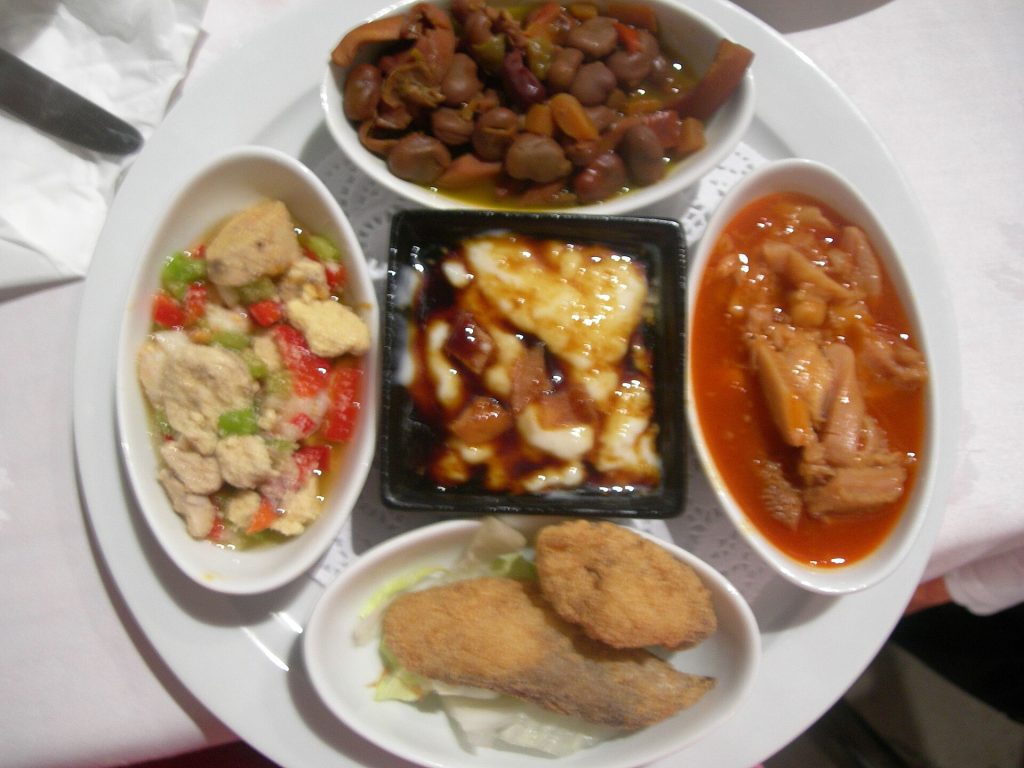
Espinacas con garbanzos, spinach with chickpeas, is a useful introduction to the region’s vegetable cooking. Gazpacho and salmorejo offer different cold-soup experiences: the latter is typically thicker, often with garnishes that change its suitability for particular diets.
Ask about stock, toppings and preparation if you avoid meat, dairy or eggs. A vegetable-led name does not tell you everything about a dish. Likewise, fried items can share oil or preparation space with other ingredients, which matters for allergies.
Slow cooking and fried food
Carrillada, usually slow-cooked cheek, suits a meal when you want something substantial. Pringá brings rich cooked meat into another format, often as a filling. Croquettes and fried fish are other common menu possibilities, but vary enough that asking about the day’s choices is worthwhile.
Build some contrast into the order. Several fried dishes followed by another rich meat plate can make a heavy lunch, especially before sightseeing in warm weather. A cold plate or vegetable dish may balance the table more comfortably.
Use markets for the right kind of visit
Triana Market makes a natural stop when exploring across the river, while the Encarnación area offers another market setting within the centre. Think of these as places with individual businesses rather than a single attraction operating to one universal schedule.
Produce shopping, browsing food stalls and eating at a bar can follow different rhythms. If the market is a priority, visit earlier in the day and check the individual stall or venue you want. Do not assume an evening dining option means the fishmongers and greengrocers will also be open.
Keep walkways clear and ask before photographing people or their displays closely. Buying a small item or stopping for a meal is a more considerate way to engage than treating a working stall as a photo backdrop.
Choose a neighbourhood, then a table
Santa Cruz is convenient between the main monuments, though convenience alone does not establish quality or value. Compare the dishes and prices rather than choosing solely because a terrace has a view of a celebrated street.
Triana suits an evening built around food and a walk across the river. Central streets around Plaza del Salvador and other parts of the old core provide further possibilities. None of these areas is uniformly inexpensive, traditional or quiet: the actual venue matters.
Our Seville accommodation guide can help if being able to walk home after dinner is an important part of the stay.
Standing, seated or moving between bars?
A standing counter works well for a short stop when everyone is comfortable eating that way. A seated meal is the better choice with tired children, limited mobility or a group needing a proper rest. Check whether table service and counter ordering follow different arrangements before settling in.
A tapas crawl is enjoyable when you genuinely want several short stops. Keep it to a small area and choose a few venues rather than spending the evening searching for the next address. Changing bars should improve the meal, not become a rule that makes it harder to relax.
Plan the meals that matter
Reserve a restaurant you particularly want, especially if your group needs a specific seating arrangement. For other meals, leave room to stop near the day’s sightseeing. Ask about kitchen hours: a place being open for drinks does not guarantee that its full menu is available.
In summer, protect a cool seated lunch and avoid making every break alcoholic. Finish the meal with enough time to rest before the next outing. Our two-day Seville itinerary leaves those intervals deliberately open, so food remains part of the visit rather than an interruption to it.