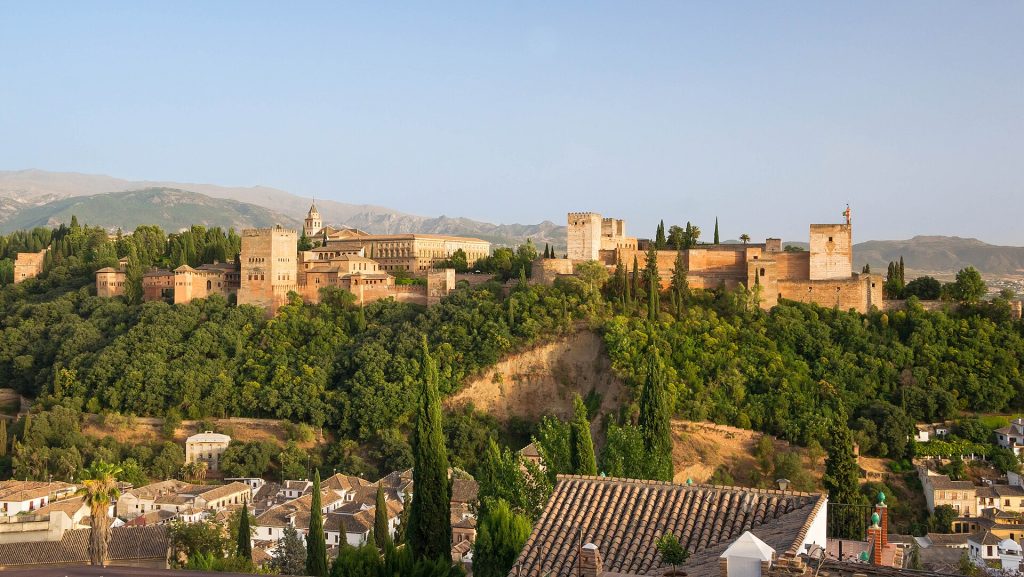
Granada is a city of short distances and significant climbs. The Alhambra occupies its own hillside, the Albaicín rises across the valley, and the lower centre provides the practical link between them. Planning around that geography matters more than fitting every famous view into one afternoon.
Allow two full days for the Alhambra, a neighbourhood walk and the cathedral district. Three gives you a more comfortable pace, particularly if you want a second cultural visit or time in Sacromonte. Book the Alhambra before fixing the rest of your sightseeing, then leave enough flexibility for the city beyond it.
Understand the city before choosing a base
The lower centre around the cathedral and major shopping streets is the easiest starting point for a mixed visit. From there, routes lead towards the Albaicín, the Darro valley and the Alhambra hill. A place that looks close to a monument on a map may still involve a steep approach.
The Albaicín offers lanes, viewpoints and a very different atmosphere from the lower streets. The Alhambra area offers proximity to the complex, but that is not automatically the same as easy access to restaurants and everyday city outings. Sacromonte lies further along the hillside, with its own landscape and cultural associations.
Use our Granada accommodation comparison to weigh those choices. The best base is one that supports the whole visit, including the return after dinner, rather than only your biggest booking.
Make the Alhambra the main anchor
Choose the ticket you actually want
The Alhambra is a complex of different spaces, not one room reached immediately after the entrance. The Nasrid Palaces, Alcazaba and Generalife each contribute something different. Compare the scope of the available ticket types and confirm whether the Nasrid Palaces are included before paying.
Use the official ticket website rather than assuming the first search result is the monument’s own service. If a ticket is sold out, do not treat another product with a similar name as equivalent. A garden-focused visit can be worthwhile, but it is a different choice.
Build the day around the palace time
Where your ticket includes the Nasrid Palaces, their specified entry time is a central planning constraint. Reaching the wider complex is not the same as reaching the palace entrance. Allow for the approach, checks and walking within the site before that time.
Carry the original identification required by the booking and keep tickets available throughout the visit. For children, obtain the appropriate ticket even when admission is free, and read the current age-related documentation rules. Our Alhambra planning guide explains the main decisions without turning the experience into a logistics exercise.
Leave room to look
Courtyards, carved surfaces, framed views and water connect the Alhambra’s spaces. Give yourself time to notice those relationships rather than moving only between the most recognisable photograph spots. The Generalife gardens offer a different rhythm, while the Alcazaba introduces another aspect of the hilltop setting.
The visit involves outdoor walking, changing surfaces and periods on your feet. It is sensible to leave the rest of the afternoon flexible rather than attaching a demanding city walk to the exit. With young children, check pushchair restrictions and choose a practical carrying arrangement before arrival.
Explore the Albaicín as a neighbourhood
The Albaicín is one of Granada’s defining areas, with narrow streets, changing levels and views across to the Alhambra. Its interest comes partly from the way the district unfolds: small turns reveal squares, whitewashed walls and glimpses of the opposite hill.
Choose a manageable route and give it a destination, such as a viewpoint or a meal. Wandering can be enjoyable, but repeated accidental climbs become tiring. If the ascent would use all your energy, take suitable transport uphill and plan a shorter walk from there.
Mirador de San Nicolás is the obvious place for the celebrated Alhambra view, but it is popular. Visit for the outlook rather than an expectation of solitude. Keep residential entrances clear and avoid turning the approach into a search for private terraces or rooftops.
Not every lane is equally suitable for a buggy, suitcase or wheelchair. Check the actual access to any accommodation or restaurant before booking. A broad statement that the district is walkable does not describe its gradients or surfaces.
Follow the Darro valley without rushing
Carrera del Darro and the route towards Paseo de los Tristes provide a lower-level way to appreciate the relationship between the hills. The river setting, bridges and buildings make a worthwhile walk even when you have no additional admission planned.
This is a useful outing after a seated lunch or on an evening when you want atmosphere without another climb. It is also a well-known visitor route, so allow space for other pedestrians and do not assume a narrow pavement will be effortless with luggage.
If you continue upwards afterwards, count that as a separate commitment. A route that starts gently beside the river can change character quickly. Stop for a view or drink when it suits you rather than feeling obliged to connect every district in one continuous loop.
Give the lower centre its own time
The cathedral and Royal Chapel provide a different historical layer from the Alhambra. Choose an interior visit according to your interests and consult the relevant visitor information before fixing the day’s order. They are separate places with their own arrangements, not interchangeable additions to one general city ticket.
The surrounding streets are useful for shopping, cafés and a less demanding walk. Explore the area around the Alcaicería with a clear sense of what you want to buy, rather than treating souvenir browsing as a required cultural exercise.
The lower centre also provides a practical place to reset the day. A meal, pharmacy stop or return to your room is easier here for many visitors than on the upper hills. That everyday convenience is part of why a central base can work well even when your main reason for coming is the Alhambra.
Sacromonte and flamenco
Sacromonte is associated with cave dwellings and flamenco, but it is a neighbourhood rather than a single performance venue. Its hillside setting and views deserve consideration separately from booking an evening show.
If you choose a performance, compare the format, seating, duration and what the price includes. A dinner package, a shorter show and a more intimate listening setting create different evenings. Pick the one that matches your interest rather than assuming every cave venue offers the same experience.
Plan the return before the show starts, particularly if your accommodation is elsewhere on the hills. Walking up and down unfamiliar lanes after a long sightseeing day may be less appealing than it sounded when booking. Be considerate with photography and follow the performers’ and venue’s instructions.
Food and the pace of the day
Granada’s association with tapas makes a few short food stops appealing, but practices vary by establishment. A drink may come with a small tapa in some places; do not assume you can choose it freely, that every venue works the same way or that it replaces a meal for everyone.
Compare the actual menu and serving format. A seated lunch is useful after a substantial morning, while a few smaller plates can suit an evening when you want variety. Let the location of the day’s visits shape where you eat instead of repeatedly crossing town for a single recommended address.
If you have dietary requirements, ask directly about ingredients, stock and garnishes. A small complimentary plate may not be adaptable, so ordering something explicit can be simpler. Leave enough time between a large meal and an uphill walk to keep both enjoyable.
How many days do you need?
Two full days is a practical minimum for combining the Alhambra with the Albaicín and lower centre at a reasonable pace. It allows one main hilltop visit and another day arranged around neighbourhoods and the cathedral district.
Three days gives space for Sacromonte, another cultural interest or a slower morning. That extra day is particularly valuable when heat, mobility needs or children’s attention spans call for shorter outings. It need not be filled with another long excursion.
Our two-day walking itinerary shows how to group the main areas. If you have only one day, prioritise the booked experience you care about and accept that the rest of the city will be an introduction.
Arrival and local transport
Granada can be reached from other Spanish cities by rail or road services, with the most convenient option depending on the date and starting point. Our Málaga and Madrid transport comparison explains how to compare direct journeys with connections.
Within the city, combine walking with appropriate local transport for the hills. Check the actual stop and entrance you need rather than simply selecting the nearest landmark. If you arrive with a car, get parking and access instructions from your accommodation before entering the historic districts.
A vehicle is rarely an advantage for ordinary sightseeing around narrow central streets. Leaving it in arranged parking and exploring without it can make the visit considerably simpler.
Match the season to your plans
Warm-weather visits benefit from early hill walks, water and a proper break. The Alhambra’s gardens and routes include exposed areas, so do not count the entire visit as indoor sightseeing. In cooler months, evenings can feel cold, especially when sitting outside or waiting for a view.
Choose footwear for slopes and uneven ground in any season. Check the forecast and leave a flexible interval after your main reservation. Granada’s most memorable moments often come from being able to pause between its major sights, rather than hurrying to prove that you reached every hill.