Berlin’s historical routes and contemporary art are most useful when explored as distinct neighbourhood walks. A surviving Wall section, a mural and a former industrial yard can reveal different parts of the city, but they need context. Choose one route for a half-day rather than drawing a line between every alternative sight on a map.
Bernauer Straße: understand the border before following it
The Berlin Wall Memorial is a strong starting point for travellers interested in division. The setting helps explain the physical border and its effect on streets, buildings and lives. It offers more than the opportunity to stand beside a piece of the Wall.
Begin with the available interpretation and move through the outdoor areas slowly. Read personal accounts and notice how the former border relates to the present neighbourhood. Check the Berlin Wall Foundation for current visitor facilities and guided options if you want a structured introduction.
Pair the visit with a quiet meal or a shorter neighbourhood walk. It can be emotionally demanding, and rushing straight to another memorial may reduce your ability to take in either place.
For an extended outing, continue towards a chosen part of Prenzlauer Berg or Mauerpark. Check the walking route and any event schedule, and do not expect a market scene on a day when no market is operating.
East Side Gallery to Kreuzberg: art after the Wall opened
The painted Wall beside the Spree offers a different story: artistic responses to the opening of the border and the period of change that followed. Treat the works as more than a line of photo stops, allowing time to compare images and themes.
The official East Side Gallery visitor information provides context and current guided options. The outdoor gallery and its visitor centre have different access arrangements, so check the latter if you intend to use it.
Continue towards Oberbaumbrücke, then choose a manageable section of Kreuzberg for food and public-facing art. The bridge, river and adjoining neighbourhoods provide a coherent walk without needing to reach every famous mural.
Keep cycle routes and narrow pavement sections clear when taking photographs. Do not add stickers or marks, and remember that a work visible from a public street does not give permission to enter the adjoining building.
Kreuzberg: look for the current scene
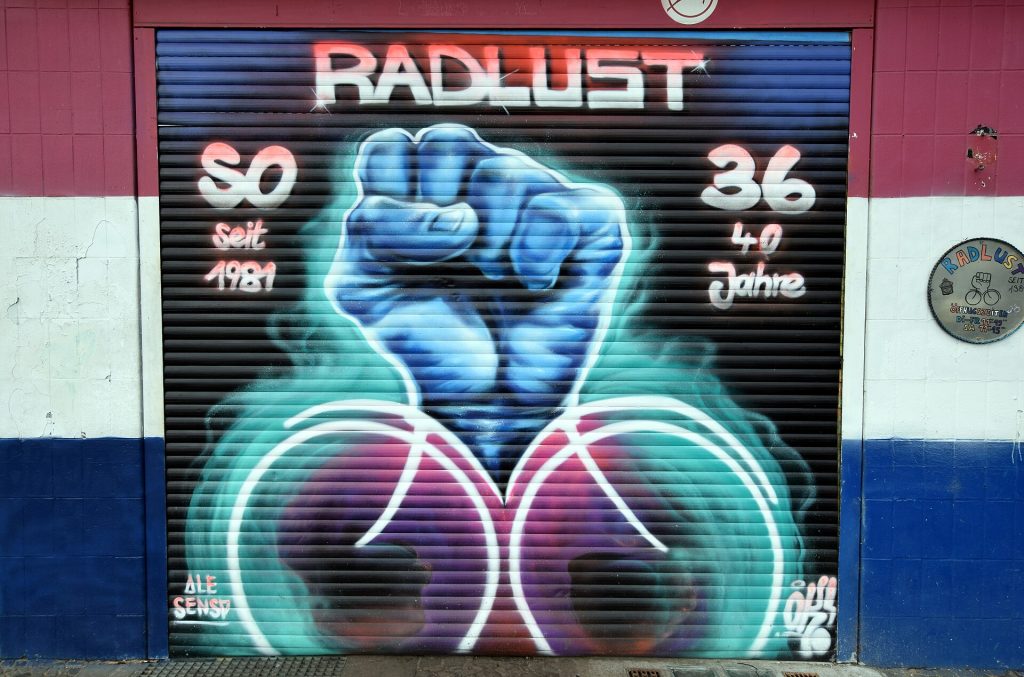
Choose a specific starting area, such as streets near Schlesisches Tor or another cluster that matches your interests. Explore independent shops, small galleries and public murals, taking time to read any information available.
Street art changes through overpainting, redevelopment and the temporary nature of the work. Avoid making a single image the sole purpose of the outing. The neighbourhood’s businesses, architecture and everyday food can make the walk worthwhile even when a mural has gone.
For deeper explanation, choose a guide who discusses artists, local history and changing urban space. Compare the route and group size before booking. A good walk should provide interpretation, not simply reveal where to take photographs.
Working studios, residential courtyards and cultural venues have their own opening arrangements. Ask before entering or photographing people at work, and respect signs that restrict access.
Central memory route: Brandenburg Gate and beyond
For a more historical half-day, begin around the Brandenburg Gate and move towards the government quarter or nearby memorials. The central area’s monuments can be understood through the different political systems that shaped the city, rather than treated as unrelated landmarks.
Choose a limited number of stops. The Memorial to the Murdered Jews of Europe and the Topography of Terror require a different kind of attention from an architectural walk or café stop. Allow time for reading and reflection.
Do not try to trace the entire former border on foot during a short city break. Its scale and varied locations make selective routes more useful. If following markers in streets, keep looking at traffic and junctions rather than walking while focused only on the ground.
Build a walk that fits the day
Berlin’s broad streets and dispersed centres can make a route longer than expected. Check the public transport option at the beginning and end, and carry water and a weather-appropriate layer. In winter, start earlier so the interpretive outdoor sections do not fall entirely after dark.
For mixed interests, combine one art-led route with a meal rather than adding another museum automatically. The three-day Berlin itinerary shows how to separate these areas across a visit.
If your main interest is a particular gallery or cultural venue, check its current programme first. Contemporary Berlin is changing work and lived space, not a permanent exhibition assembled for visitors. Leaving room for what is actually open can make the walk more interesting than following an outdated checklist.