Berlin Brandenburg Airport, usually shown as BER, has rail connections into the city, but the best train depends on your final address. Hauptbahnhof is useful for some stays, while another interchange can save a later change. Plan to the property or nearest practical stop rather than simply buying a ticket to central Berlin.
Find the airport railway station
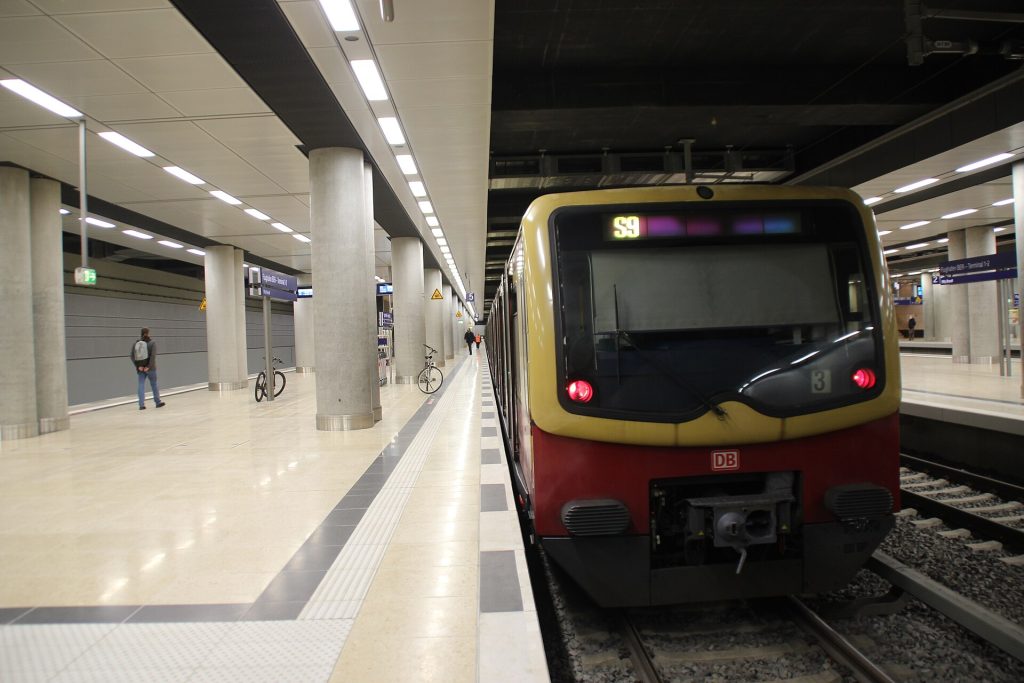
The Flughafen BER station is beneath Terminal 1. Follow airport signs and allow time for the walk from your arrival area. If using Terminal 2, check the signed route between the buildings rather than expecting a separate station directly under that terminal.
Keep the accommodation address and a route saved before leaving arrivals. A station name can be easier to recognise than an unfamiliar street, particularly when several transport options appear on a departure board.
Compare express, regional and S-Bahn routes
The Airport Express, FEX, provides a direct central connection, with other regional and S-Bahn services offering useful alternatives. Timetables and routes change, so use the airport’s official public transport information for the current network.
Do not board the first train labelled Berlin without checking its stops. A slower direct journey to your district can be easier with luggage than a faster train followed by multiple interchanges. Conversely, an express connection may be the strongest choice when your accommodation is near its route.
For late arrivals or early departures, check the precise service on your travel date. A line running during the night does not guarantee the same frequency or route as daytime travel.
Buy the correct fare coverage
BER lies in fare zone C, while much central sightseeing falls within AB. A central AB ticket alone does not cover the airport journey. Select a ticket or pass with the appropriate coverage for the full route, checking the current conditions through the official journey planner.
Ticket format matters too. Follow the instructions for validating paper tickets or activating app products before travel. Buying a ticket and making it valid are not always the same step.
Do not assume every long-distance train accepts ordinary local transport tickets. Match both the route and the train category before boarding, and retain the valid ticket throughout the journey.
Plan the last leg
Check reception hours if your arrival is late. A property may require advance notice or self-check-in instructions, and a successful train journey is only part of reaching the room. Save a telephone number and the entrance details offline so a low battery or weak signal does not complicate the final walk.
Mitte, Kreuzberg and Prenzlauer Berg cover broad areas. Identify the exact station or bus stop closest to your property and inspect the walk from it. A different interchange can avoid stairs, long corridors or an unnecessarily large station.
Travellers needing step-free access should check the complete route, including lifts and the final entrance. Allow time for luggage and keep walkways clear aboard trains.
When a taxi is simpler
A licensed taxi or confirmed transfer can suit groups, heavy luggage or an awkward late arrival. Confirm the fare basis and vehicle capacity, and request child seats or accessible transport explicitly if needed. Compare the whole price with public transport for everyone in the group.
For departure, work backwards from the airport’s recommended arrival time and add the journey to your first stop, waiting and terminal access. Check disruption notices before leaving. If choosing a base, compare Berlin’s main accommodation areas against both the airport route and the days you will spend in the city.