Venice’s quieter walks are best understood as smaller routes away from the most concentrated visitor flows, not a promise of empty streets. Cannaregio, Dorsoduro and parts of Castello can each provide a different neighbourhood outing, with campi, canals and food stops giving the walk a natural rhythm.
Choose one district for a half-day and leave room to stop. Trying to connect every allegedly quiet corner can create more distance than simply following the main landmarks.
Cannaregio: follow a local-sized circuit
Choose a starting point that fits your base, then connect a few canals and campi rather than marching across the entire district. A café or food stop provides a useful endpoint and a reason to spend time rather than continually seek another photograph.
The area contains both busy routes and more residential streets. Quiet depends on the exact location and hour, so avoid treating the district name as a guarantee.
If a cultural site interests you, check its current visitor arrangements and make it a deliberate part of the outing. Historical context can enrich the walk without turning every doorway into a claim about the past.
Dorsoduro: culture and a wider-water pause
Dorsoduro works well when you want to combine a selected collection or church with streets and a more open waterside setting. Choose the interior because its content interests you rather than simply because it is near a scenic route.
Afterwards, shorten the walk if attention or legs are fading. The point of a less pressured district day is to preserve space, not fill it with a second complete sightseeing programme.
A waterside stop can provide a useful change after narrow lanes. Follow public routes and local rules, keeping working access and transport stops clear rather than assuming every edge is a suitable place for a group to settle.
Castello: choose the actual distance
Castello covers more than a brief extension beyond San Marco. A modest local walk and a longer route towards its eastern areas create different days, so decide how far you want to go and how you will return.
This is particularly important with children, a buggy or limited walking stamina. Bridges and wrong turns can make a route more demanding than its map length suggests.
Use a clear endpoint, such as a meal or a selected public space, rather than continuing indefinitely because the next canal looks appealing. An ordinary pause can be more rewarding than another kilometre covered to complete the district.
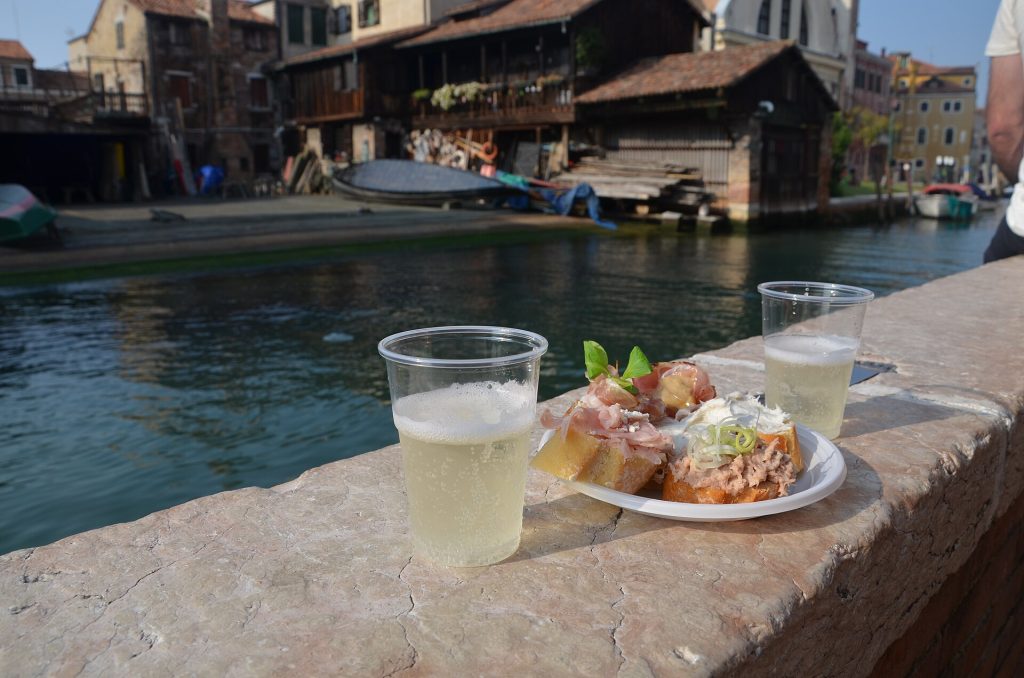
Bacari and cicchetti: a flexible food format
Bacari can provide short food-and-drink stops, with cicchetti offering smaller portions that vary by venue. Look at what is available, how it is priced and whether you order at a counter or sit down.
Do not assume that every stop has space for a large group or that standing is comfortable for everyone. A seated meal may be the better choice after a long museum morning or with tired children.
Order gradually
Start with a small selection and add more if you want it. Clarify ingredients when dietary needs matter; a short label may not describe a sauce, garnish or preparation arrangement.
Alcohol is optional to enjoying the neighbourhood. Choose a drink that suits you and avoid turning several venues into a requirement simply because the evening was described as a crawl.
Stay in one area
Moving between a few nearby places can be enjoyable. Crossing the city repeatedly for a list of recommendations often uses more time than the food itself.
Let the day’s walk determine the broad area, then choose according to appetite and available space. Reserve a substantial meal that matters, while keeping smaller stops flexible.
Walk considerately
Keep doorways and narrow lanes clear, especially when consulting a map or gathering for photographs. Residential passages and private stairs are not unrestricted shortcuts simply because they seem quieter than the main route.
Lower voices late in the evening and avoid unnecessary noise with luggage. The streets you are enjoying as a visitor are also ordinary routes home for residents.
If the path appears to end at water, turn back or check the route rather than assuming a crossing must exist. Venice’s canal geometry makes a small wrong turn a normal part of walking, not a reason to enter private property.
Our two-day Venice itinerary leaves room for these smaller circuits. If choosing a base, the accommodation comparison helps turn a neighbourhood you enjoy visiting into a practical place to return after dinner.
If you want to return to a place after dark, save a clear route and the accommodation’s directions before the evening begins. A lane that felt obvious in daylight can be less recognisable later, particularly after several turns. Keep the final walk considerate and manageable rather than turning a quiet district evening into a late search through residential passages.