In Madeira, accessible can mean different things: short, relatively level, easy to reach by car or suitable for a particular mobility need. Those descriptions are not interchangeable. A levada path can have little ascent and still include narrow sections, uneven ground or exposure.
Start with the person and the precise route, then check current conditions. This guide identifies useful starting points for comparison rather than guaranteeing that any trail is suitable for every visitor or remains open indefinitely.
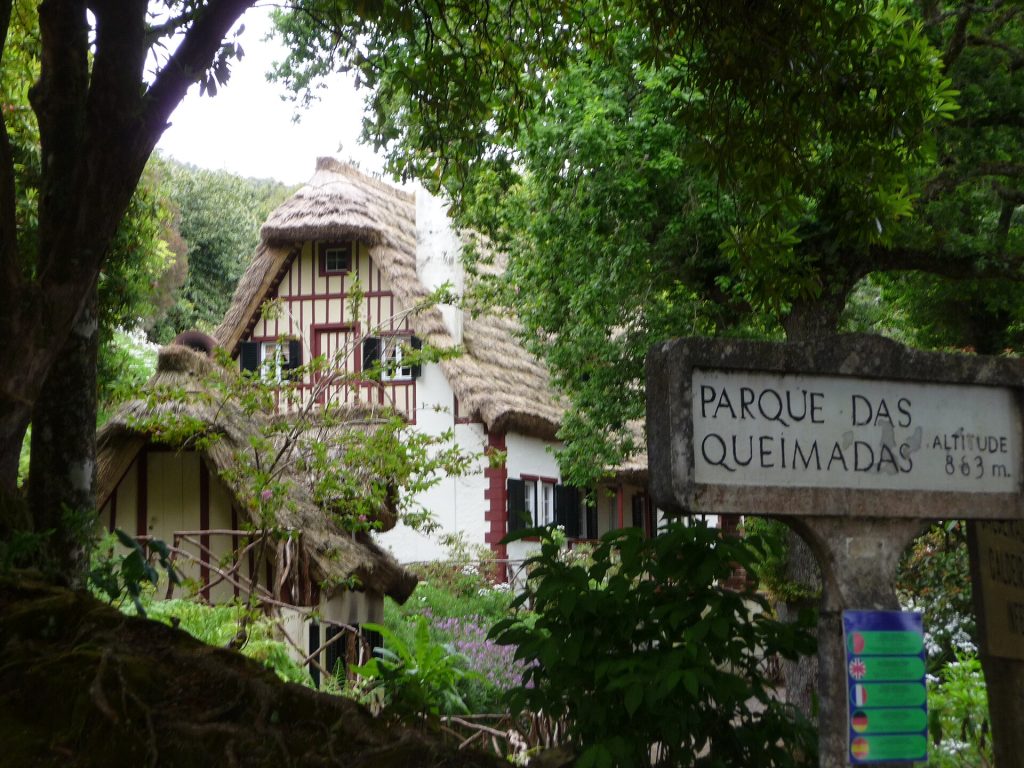
Queimadas–Pico das Pedras: begin with the adapted-route information
The route known as Um Caminho para Todos, between Queimadas and Pico das Pedras, is the obvious first place to investigate when looking for an adapted levada experience. It is distinct from assuming that the full Caldeirão Verde outing offers the same access.
Check the exact section, approach and current conditions with the official trail service. Ask about usable width, barriers, turning space and the route from the drop-off or parking area. A description focused on the path itself may leave the most difficult part of a particular visit unaddressed.
If using a wheelchair or another mobility aid, explain the equipment and assistance available when asking. What is manageable with a companion may differ from what works independently. Do not rely on a general symbol to answer that question.
Balcões: shorter does not mean universally step-free
PR11 Vereda dos Balcões, from Ribeiro Frio towards the viewpoint, is a relatively short option alongside a levada. Its appeal is the wooded route and outlook rather than a strenuous ascent.
The official description gives a return journey, so remember that the outward distance is not the total walk. Check the surface and any constrictions before deciding that a shorter trail suits your group.
It can be a useful choice for visitors seeking a smaller introduction, but should not be described as guaranteed wheelchair access. Wet ground, roots, uneven sections or the approach from the road can change the practical experience.
Why longer famous walks may not belong on this list
Popular routes such as 25 Fontes or Caldeirão Verde should be assessed in their own right, not added automatically because they follow water channels. Distance, tunnels, stairs and exposure can create a substantially different day.
A traveller comfortable with a short path may not want a long outing with few simple exit options. Choose a route that works for the least confident person rather than using a dramatic destination photograph as the only measure.
If your needs cannot be confirmed clearly, a garden, promenade or shorter permitted landscape stop may provide a better outdoor experience. Madeira is not enjoyed less fully because a particular trail is unsuitable.
Check status and booking before leaving
Classified walking routes have reservation and access requirements, and individual trails may be open, restricted or closed. Consult the official Madeira hiking information and follow the linked booking process for the exact route.
Do not assume payment means the path is suitable for every visitor, or that yesterday’s status applies after changing weather. Read the route’s own conditions and check again close to departure.
Complete essential arrangements before reaching a rural starting point, where mobile coverage may be unreliable. Save the reservation and relevant route information so you can access them without depending on a continuous signal.
Plan the start, turn and return
Check toilets, suitable parking and whether the group can stop comfortably before the walk. A path described as easy may still be awkward to reach with a large vehicle or equipment.
Agree a turn-back point and allow time for the return. Do not continue towards the viewpoint merely because it seems close when someone is already uncomfortable. The easiest version of an outing is the one that remains enjoyable both ways.
Bring clothing and water suited to the conditions, and choose footwear with grip. A low-gradient trail can still be slippery after rain. Anyone providing assistance should have enough energy for the whole return rather than using it all on the outward section.
Fit a shorter walk into a better day
Pair the chosen route with a meal or a nearby town stop, not another demanding trail. The point of selecting a more manageable walk is to preserve comfort, not create spare time that must immediately be filled.
Our seven-day Madeira itinerary keeps walking days flexible. If transport and terrain are major concerns, use the accommodation comparison to choose a base that simplifies the entire outing, including getting home afterwards.
If the main aim is a family introduction, consider turning back before the advertised endpoint when that produces a comfortable return. Reaching a named viewpoint is less important than everyone finishing safely and willingly. A guide familiar with the specific route may help answer practical questions, but ask what assistance is actually offered rather than assuming every guided walk includes individual mobility support.