Choose the Uffizi for a major painting collection and the Accademia for an encounter centred on Michelangelo’s David with surrounding works. They are separate visits with different scales. If both matter to you, different days usually provide a better balance than one long sequence of art and queues.
Book through the museum’s own route
Use the official Uffizi ticket page to reach its current booking service and compare the exact product. Combined passes and specialist access can cover different spaces, so do not assume every offer with Uffizi in the title is equivalent.
For the Accademia, begin with the official museum website and follow its current ticket instructions. Confirm the visitor name, concession documentation and any collection or entry procedure attached to the booking.
An advance reservation helps organise the day but does not eliminate security or the need to find the correct entrance. Leave a margin before the time and avoid scheduling a meal or train immediately after an assumed short visit.
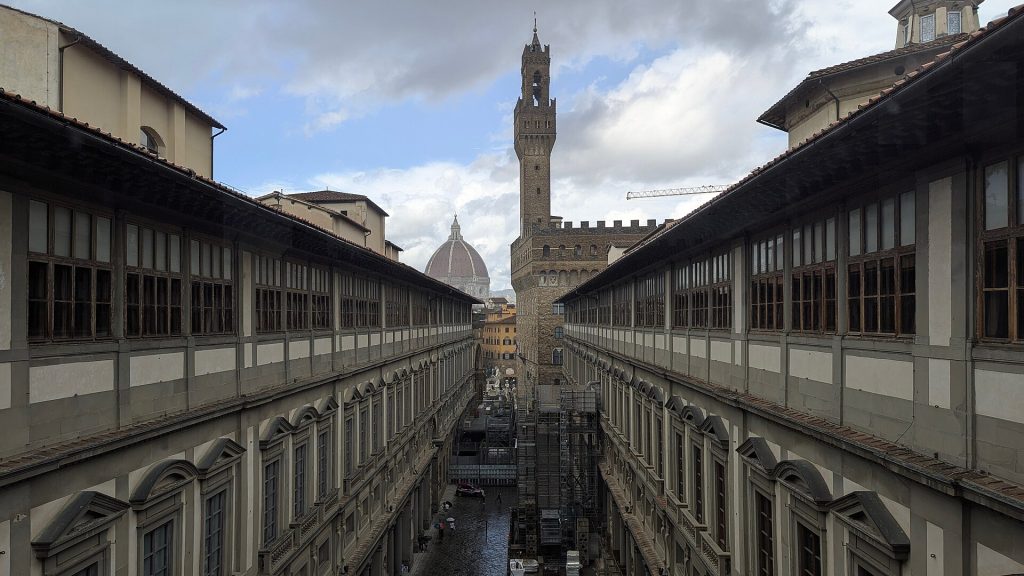
Uffizi: choose a route through the collection
Identify a few artists, periods or works you care about before entering. Use them as anchors rather than a rigid list that prevents you noticing anything else.
The collection rewards sustained attention, so allow a substantial morning or afternoon. You do not need to read every label or see every room at the same pace. A focused route can be more satisfying than trying to complete the building while attention fades.
Plan a seated break afterwards and choose a lighter next activity, such as the river or nearby streets. A second major collection immediately after lunch is not automatically the best use of a short stay.
Accademia: look beyond the first photograph
David is the obvious anchor, but give the sculpture time. Notice how scale and detail change as you move through the permitted visitor route, then choose some surrounding works for context.
Do not treat the rest of the collection solely as a corridor to the main attraction. Equally, a selective visit is reasonable if sculpture is your central interest and the group has already spent substantial time in museums.
Check the current photography and bag rules before arrival rather than assuming they match another Florence venue. Travel with manageable belongings so the admission is not dominated by storage decisions.
Families and access needs
With children, choose a few things to notice and keep the remainder flexible. Leaving while attention remains can be more useful than continuing solely because the ticket allows it.
For accessibility, consult each museum’s current arrangements and ask about the specific entrance and route you need. A general description of a historic building cannot answer every practical question.
Keep tickets and any concession documentation accessible. The simplest preparation is knowing where to go, what the product includes and which details staff may need to see.
Put the visits into the wider stay
Our two-day Florence itinerary separates the museums and leaves space for the city around them. If only one collection interests you, choose it without feeling obliged to buy the other.
A good Florence visit is not measured by the number of famous admissions completed. It is the one that leaves enough time and attention to remember the art you came to see.
Compare any pass against the visits you will genuinely make. A product covering several venues can be useful for a longer stay, but it should not dictate an itinerary built mainly to recover its price. Two carefully chosen admissions may offer better practical value than a broader package that leaves little time to enjoy each collection.